

Jacked: A Poem About Phone Addiction, Privacy, and the Digital Age

Updated: Aug 18
This poem forms part of my Aftermath collection, a body of poetry written after meeting Jenn, during a period when love, reflection, and emotional clarity began to replace chaos.
Written in 2020, Jacked began with a simple thought about the ever-changing impact of technology on our lives and, in true me style, quickly became a sprawling long-form poem.
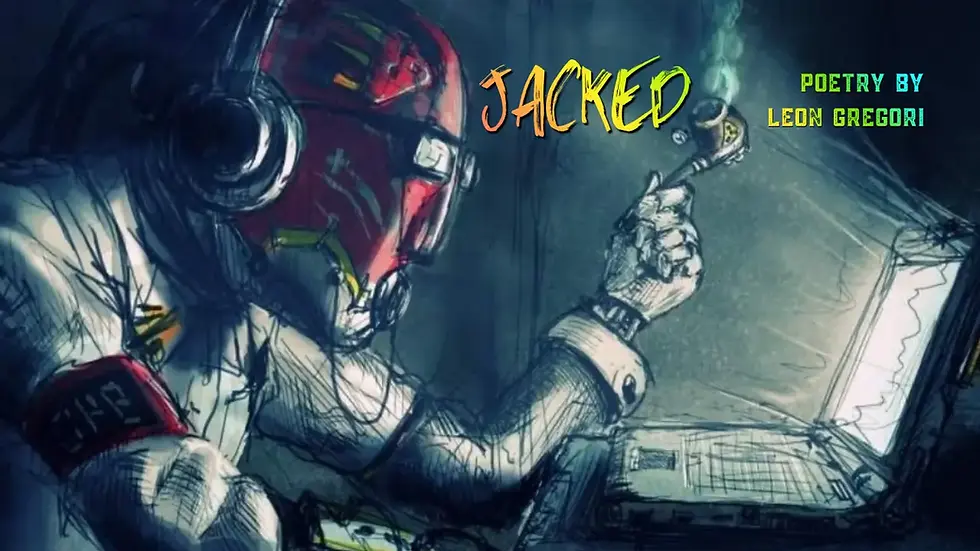
This was intended to be the first in a series exploring our increasingly complicated relationship with technology. It looks at the phones in our hands, the information we willingly surrender and the strange contradiction of feeling both liberated and controlled by the same devices.
To be clear, I have never been against technology. Even when I was initially suspicious of devices such as Alexa back in the day, I could still see their convenience and potential.
The question was never whether technology was good or bad. It was whether we understood just how deeply we were allowing it into our lives.
To this day I ask myself... how much does our technology serve us... and how much have we started serving it?
Are We Already Chipped?
The “chip” in Jacked was never intended to be taken literally. We do not need something implanted beneath our skin when so many of us willingly carry a device capable of recording our locations, routines, interests, conversations, purchases, and relationships.
That does not make the phone inherently sinister, though. It makes it extraordinarily powerful.
Our phones can educate us, guide us through unfamiliar places, connect us with people across the world, and place almost unlimited information in our hands. They can also consume our attention, encourage compulsive behavior, and quietly turn our everyday activity into valuable data.
Perhaps the most uncomfortable part is that we know this and, for the most part, continue regardless.
I may reject an occasional app permission or check which cookies I am accepting, but I cannot pretend that I have removed myself from the system. I use technology constantly. I benefit from it. I enjoy it. Like so many of us, I am already deeply plugged in.
That is the contradiction at the heart of Jacked: this is not a warning written from outside the machine. It is a confession from someone inside it.
Reading Jacked Again in 2026
Reading this poem again in 2026, what strikes me most is not how much has changed, but how familiar it still feels.
When I wrote Jacked, voice assistants were already entering our homes, and artificial intelligence was becoming more visible in everyday technology. Today, AI assistants can write, converse, remember preferences, interpret images, and become part of our daily routines. The invisible robots mentioned in the poem no longer feel particularly invisible.
Yet the smallest behavior remains one of the most revealing: waking up and reaching for the phone.
Sometimes it is genuinely to check the time. Then comes the notification panel, the messages, the emails, the news, and the social feeds. One purposeful action becomes ten automatic ones before the day has properly begun.
I can still spend several hours a day on my phone, without including television, computers, and every other illuminated screen around me. Is that liberating, productive, and entertaining... or consuming, distracting, and frustrating?
In truth, it can be all of those things at once.
Before it reached the blog, sections of Jacked were originally shared through a series of Instagram posts:
Selected artwork from the original Jacked Instagram poetry series, first shared in 2020 under my former Instagram handle, @leon.gregori213.
The Invisible Weight of Digital Life

The amount of digital information humanity creates continues to grow, and storing it requires physical infrastructure, raw materials, and immense quantities of energy.
Back in 2020, I had encountered a provocative, fascinating paper by physicist Melvin Vopson called The Information Catastrophe. It explored what could theoretically happen if digital information continued growing at extreme rates.
Under its most dramatic scenario—sustained annual growth of 50%—the paper calculated that digital bits could eventually outnumber all of the atoms on Earth. It also proposed that half of the planet’s mass could be represented by digital information by 2245.
That was not a conventional prediction of what will happen. The calculation relied on an extreme growth rate and on the proposed mass–energy–information equivalence principle, which the paper acknowledged had not been experimentally verified.
Nevertheless, the broader question remains valuable. Digital information may appear weightless, but producing, processing, and storing it has a very physical cost.
Researchers are also exploring the possibility of storing digital information within synthetic DNA. The technology remains developing, but its potential storage density illustrates just how urgently we are searching for new ways to contain the data we continually create.
Our digital lives may feel invisible, but the systems sustaining them are anything but.
Final Thought
How does your relationship with technology affect you?
Does it make you feel liberated and connected, or consumed and frustrated? How long does it take before you check your phone after waking up... and how often do you pick it up without consciously deciding to?
Digital wellbeing may ultimately depend less on rejecting technology and more on recognizing when we are choosing to use it... and when it is quietly choosing for us.
The digital world is only moving forward. Refusing to participate completely could mean losing touch with a society now built around technology. Accepting everything without question, however, means surrendering more than we may realize.
Perhaps we are already jacked.
It is just a matter of how tightly we allow ourselves to remain plugged in.
Join the Conversation
Technology connects us, informs us, and makes countless parts of everyday life easier. Yet the same devices that give us freedom can also consume our attention, shape our habits, and collect more information about us than we may fully realize.
Do you feel in control of your relationship with technology? Does your phone leave you feeling connected and empowered, or distracted and overly dependent? How long does it take you to reach for it after waking... and could you comfortably spend an entire day without it?
I'd genuinely love to hear your thoughts. Come join the conversation:

More From Leon...
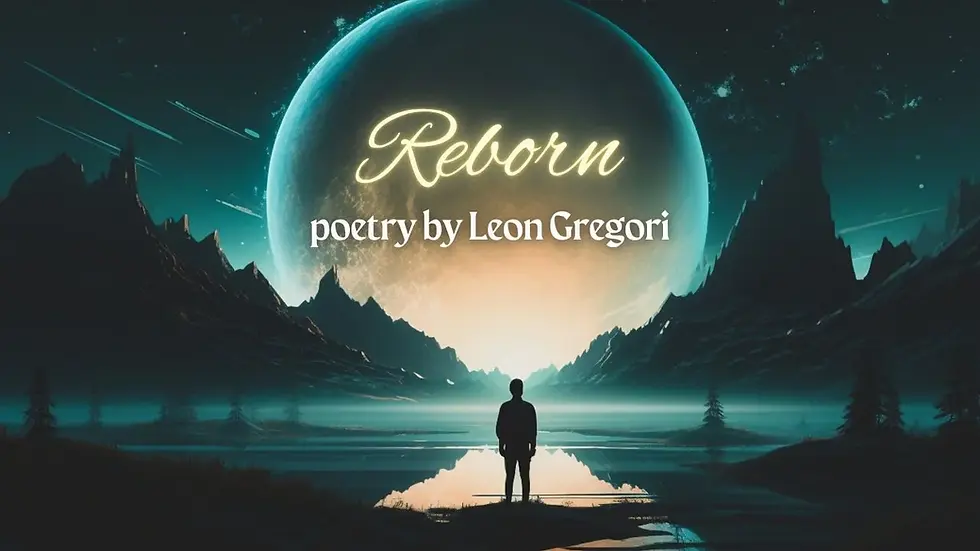
Reborn
Written just days after meeting Jenn, this poem captures the exact moment everything changed: when love helped me become 'reborn.'
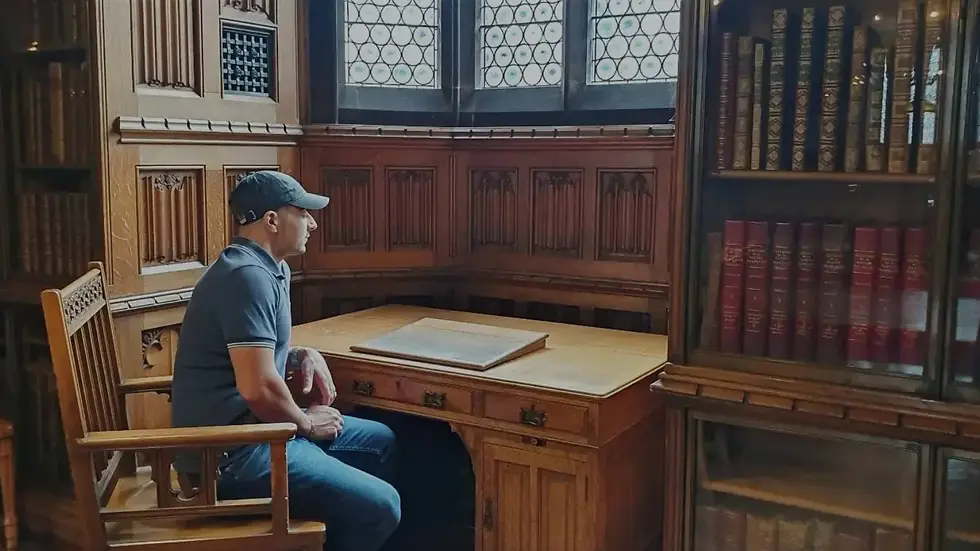
About Leon Gregori
I've been writing poetry since my mid-teens and find it natural to express myself through words. My long-form content focuses on themes of heartbreak and life.
⪢ Explore the Aftermath collection
Discover more poems written after meeting Jenn, with reflections on love, trust, personal growth, creativity, and finding peace after life's darkest chapters.


Comments