Greece: Island Vibes, Coastal Views & History by the Aegean
Your Guide to the Land of the Greeks
Our Greek adventures began on the island of Kos, a scenic stop during our Bodrum–Kos ferry trip. We explored the harbour, wandered the Old Town, and soaked up sea views along the promenade—all packed into a short but unforgettable visit. While Kos marks our first trip to Greece together, Leon previously visited Crete, experiencing its rugged landscapes, local food, and timeless ruins. Together and apart, Greece has left its mark. This guide brings you island highlights, practical tips, cultural context, and personal reflections from both sides of the Aegean.
Quick Navigation
Share This Guide
Discover
Our Top Recommended Places
Our Interactive Map & Guide to Greece
Check out all the places we visited in Greece with our interactive map from Wanderlog. Tap any of the numbers for more information, including directions, our blog posts, links to reviews, and much more.
Wanderlog is a free travel planning app that allows users to create trip itineraries, organize flights, hotel, and car reservations, view places to visit on a map, and collaborate with friends. It saves time and is super easy to use!
If you see nothing here, please refresh the page
Use our interactive map to easily locate the top hotels here, sourced from a variety of reputable platforms such as Booking.com, Vrbo, Expedia, Get Your Guide, and Hotels.com.
Powered by Stay22, our map allows you to zoom easily, providing a comprehensive view and so you can identify the most convenient hotel options based on your current location or desired destination.
Find the Best Deals on Top Hotels in Greece
Top Activities - Book in Advance
Interesting Facts
Here are 15 interesting facts about Greece Some may just surprise you!
1. Greece is the Birthplace of Democracy: Ancient Athens pioneered the concept of democracy over 2,500 years ago.
2. The Greek Alphabet is one of the Oldest Still in Use: It dates back to around the 8th century BC and is the basis for many modern alphabets.
3. Greece Has Over 6,000 Islands, But Only About 200 Are Inhabited. These islands range from popular tourist spots like Santorini and Mykonos to tiny, secluded islets.
4. The Olympic Games Originated in Greece: The ancient games started in Olympia in 776 BC and inspired the modern Olympics.
5. Greek Cuisine is Famous Worldwide: Dishes like moussaka, souvlaki, and tzatziki are beloved for their fresh ingredients and flavors.
6. The Parthenon on the Acropolis is a Symbol of Classical Greece: This ancient temple dedicated to Athena dominates Athens and is a masterpiece of architecture.
7. Greece has a Rich Mythological Tradition: Gods, heroes, and mythical creatures like Zeus, Hercules, and the Minotaur are central to Greek culture.
8. The Country Has More Archaeological Museums Than Any Other in Europe: These museums preserve and showcase Greece’s ancient treasures.
9. Greek Orthodox Christianity is the Dominant Religion: The church plays a significant role in cultural festivals and daily life.
10. Greece’s Coastline is one of the Longest in the World: At about 13,676 kilometers, its coastline offers endless beaches and stunning seascapes.
11. The Language Has Changed Little Over Millennia: Modern Greek is a direct descendant of ancient Greek, with many similarities.
12. Greece has a Mediterranean Climate: Hot, dry summers and mild, wet winters characterize much of the country.
13. The Meteora Monasteries Are Built on Rock Pillars: These UNESCO-listed monasteries perch dramatically atop sandstone pillars in central Greece.
14. Greece was the First Country to Declare Independence from the Ottoman Empire: In 1821, it began the struggle that led to modern Greece’s formation.
15. Greek Coffee is a Cultural Ritual: Thick and strong, it’s often enjoyed slowly with conversation.
Latest Posts


Bodrum & Kos Birthday Getaway – Our Full Itinerary and Experience


Mavromatis Taverna, Kos – Celebrating Leon’s Birthday with Authentic Greek Flavors


Michalis Apartments Studios, Kos – Our Review & Birthday Experience


Best Cities in Europe for Food Lovers on a Budget


Guide to Taking the Bodrum–Kos Ferry: Our Smooth Sailing Between Turkey and Greece
Travel Essentials
Travel Information for Greece: Practical Tips & Essentials
Internet, SIMs, Dial Code & Plug Sockets
Greece has excellent connectivity in urban areas and tourist hotspots, with reliable mobile coverage and widely available Wi-Fi.
In rural villages and on remote islands, speeds can drop, but overall, travelers will find staying connected easy.
Internet cafés, once common, are now rare as mobile data and Wi-Fi dominate.
Save 50% on NordPass Premium
NordPass is more than an intuitive password manager – it helps both businesses and individuals easily secure and monitor access to their online accounts and sensitive information.
Get 73% off NordVPN's
2-year plan
The most advanced VPN with additional features. One of the fastest VPNs globally. Secures up to 10 devices using a single account. Helps you avoid phishing, scams, and malware threats.
Internet Service Providers (ISPs) in Greece
Greece’s telecom market is competitive, offering strong coverage on the mainland and most islands.
● Cosmote: The largest provider, with the best nationwide 4G/5G coverage, especially in remote areas.
● Vodafone Greece: Strong in cities and islands, with good prepaid packages.
● Nova (formerly Wind): Affordable, with decent coverage in urban areas but weaker in rural zones.
● Data Speeds: 5G is expanding quickly in major cities like Athens and Thessaloniki, while 4G is standard elsewhere.
💡 Tip: If you plan to visit multiple islands, Cosmote is usually the most reliable choice.
Mobile Phone Options for Tourists
Getting connected as a tourist is straightforward, with both SIM and eSIM options available.
Prepaid SIM Cards (Available at airports, official shops, and kiosks):
● Cosmote Tourist SIM: Includes generous data, calls, and texts.
● Vodafone Tourist SIM: Popular for travelers with packages designed for short stays.
● Nova SIM: Budget-friendly, good for light use.
● Pocket Wi-Fi: Available to rent in Athens and through travel agencies, though less common than SIM/eSIM options.
● Registration: Passport ID is required to buy and activate local SIMs.
💡 Tip: SIMs are easy to find in airports, kiosks (periptera), and city stores.
💡 eSIMs are a convenient option for newer phones. They’re ideal for short stays and can be activated online before or upon arrival. Be sure your phone is eSIM-compatible.
If you have an unlocked phone, international eSIM providers are an easy way to stay connected:
● GigSky: Quick setup, reliable U.S. data plans, and good for frequent travelers.
● Saily: Flexible and budget-friendly eSIM options, great for short-term U.S. trips.
● Simbye: Designed with travelers in mind, offering instant eSIM activation and fair pricing.
Greece Dial Code
To call Greece from abroad, use the following format:
● International Dialing Format: +30 followed by the local number (omit the initial 0).
Example: +30 21 1234 5678 (for an Athens landline)
● Greece Exit Code (to call out): 00
Example: To call the UK from Greece, dial 00 44 20 7946 0991
● Local Calls Within Greece: Include the full number, beginning with 2 for landlines or 6 for mobiles.
Example: 210 123 4567 (Athens landline), 691 234 5678 (mobile)
💡 Tip: Mobile numbers in Greece begin with 6, while landline codes start with 2, varying by region (e.g., 210 for Athens, 231 for Thessaloniki).
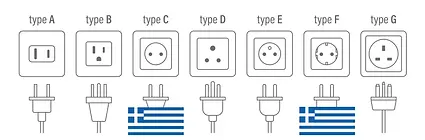
Plug Sockets in Greece
Electricity in Greece follows the standard European system.
● Types Used: Type C and Type F
● Voltage: 230 V
● Frequency: 50 Hz
● Stability: Power supply is reliable, though occasional outages may occur on smaller islands during peak summer demand.
⚠️ Voltage Safety Tip:
Travelers from North America, Japan, or other countries using 110 V should check their devices — not all electronics are dual-voltage, and you may need a voltage converter.
🔌 Adapters Needed:
Bring a universal adapter if traveling from outside Europe. Power banks are useful on long ferry trips, as charging outlets aren’t always available.
.jpg)

Greek Cuisine
Greek cuisine is one of the world’s most beloved, celebrated for its simplicity, fresh ingredients, and deep ties to tradition.
Meals are often shared, emphasizing family, community, and a relaxed pace of life.
Whether you’re dining by the sea or in a mountain village, food in Greece feels like both nourishment and heritage.
Staples
Bread, olive oil, and fresh produce form the heart of Greek dining.
● Pita Bread: Served alongside dips and grilled meats.
● Olive Oil: A cornerstone of Greek cooking, often drizzled over salads and vegetables.
● Horiatiki (Greek Salad): A mix of tomatoes, cucumbers, onions, olives, and feta.
● Fasolada: A bean soup often called Greece’s national dish.
● Spanakopita: Spinach and feta pie wrapped in crisp phyllo pastry.
💡 Tip: Always try local olive oil — each region has its own distinct flavor.
Meat Dishes
Meat plays a central role in many classic dishes, especially lamb and pork.
● Souvlaki: Skewers of grilled meat, often served in pita with salad and sauce.
● Gyros: Rotisserie meat, usually pork or chicken, wrapped in pita with tzatziki.
● Kleftiko: Slow-cooked lamb with herbs and potatoes, wrapped in parchment.
● Moussaka: A layered dish of eggplant, minced meat, and béchamel sauce.
● Paidakia: Grilled lamb chops, a staple of festive meals.
💡 Tip: For the best gyros and souvlaki, look for busy street vendors. Fresh turnover means better flavor.
Other Specialties
Greek cuisine also shines with vegetable-based and seafood dishes.
● Dolmades: Vine leaves stuffed with rice, herbs, and sometimes meat.
● Gemista: Tomatoes or peppers filled with rice, herbs, and olive oil.
● Briam: A baked vegetable medley, similar to ratatouille.
● Octopus: Often grilled and served with lemon by the seaside.
● Fasolakia: Green beans stewed in tomato and olive oil.
💡 On the islands, seafood is best enjoyed fresh. Ask what was caught that morning.
Greek Desserts
Greek sweets combine nuts, honey, and pastry in irresistible ways.
● Baklava: Layers of phyllo, nuts, and honey syrup.
● Loukoumades: Fried dough balls drizzled with honey and cinnamon.
● Galaktoboureko: Semolina custard wrapped in phyllo pastry, soaked in syrup.
● Kataifi: Shredded pastry with nuts and honey.
● Yogurt with Honey & Walnuts: A simple but iconic Greek dessert.
💡 Tip: Pair sweets with a small glass of ouzo or Greek coffee for a truly local touch.
Food Delivery
Food delivery is easy and affordable in Greek cities, though less common in remote areas.
Popular apps include:
● eFood: The largest delivery app, covering most urban centers.
● Wolt & Bolt Food: Available in Athens, Thessaloniki, and some tourist hubs.
● Coverage: Delivery works well in cities but is limited on small islands.
● Options: From gyros and souvlaki to bakery goods, most Greek staples can be ordered.
● International Chains: Domino’s, McDonald’s, and Pizza Hut are present in bigger cities.
💡 Tip: In smaller towns, delivery often works through direct phone orders. Ask your hotel or host for help if needed.
Greek cuisine is more than food — it’s an expression of hospitality and joy.
Sharing mezze, breaking bread, and toasting with local wine or ouzo are at the heart of the Greek way of life, turning every meal into a celebration.
Culture & Customs in Greece
Greek culture is deeply rooted in family, tradition, and community.
Shaped by thousands of years of history, Orthodox Christianity, and a strong sense of hospitality, life in Greece balances modernity with respect for heritage.
Visitors will quickly notice the warmth of the Greek people and the pride they take in sharing their culture.
Family & Social Interactions
Family is central to Greek society, with strong bonds extending beyond the nuclear family.
● Multi-generational households are common, especially in villages.
● Elders hold significant respect and influence in family matters.
● Sundays are often reserved for large family gatherings and meals.
● Children are raised with an emphasis on close ties and tradition.
● Guests are treated like family, often offered food and drink immediately.
💡 Tip: If invited to a Greek home, bringing sweets or flowers is a thoughtful gesture.
Religion & Customs
Religion is a defining part of daily life in Greece, even for those who are not actively devout.
● The Greek Orthodox Church is the dominant faith, guiding many traditions and festivals.
● Religious icons are displayed in homes, cars, and businesses.
● Easter is the most important religious celebration, often more significant than Christmas.
● Many villages have a patron saint celebrated with local feasts (panigyria).
● Churches and monasteries, some centuries old, remain active places of worship.
💡 Tip: Always dress modestly when visiting churches or monasteries — women may need a shawl, and men should avoid shorts.
Daily Life & Traditions
Daily routines in Greece combine a relaxed pace with a strong emphasis on social life.
● Meals are long, often stretching late into the evening.
● The kafeneio (coffeehouse) is a hub for conversation and community.
● Siesta culture exists, with many shops closing in the early afternoon.
● Music, dance, and theater remain important, with traditions like rebetiko still thriving.
● Hospitality is a way of life, reflected in the concept of philoxenia (love of strangers).
💡 Tip: Don’t rush meals; enjoying food slowly is part of the Greek lifestyle.
Etiquette
Respect, warmth, and generosity guide Greek etiquette.
● Greetings are often warm, with handshakes or kisses on the cheek among friends.
● Direct eye contact is valued as a sign of honesty.
● Using first names quickly is common in casual settings.
● Table manners emphasize sharing and generosity.
● Tipping is not obligatory, but rounding up the bill is appreciated.
💡 Tip: Avoid making the “open palm” gesture with your hand (the moutza). It’s considered offensive.
Celebrations
Festivals and holidays in Greece reflect both ancient traditions and Orthodox faith.
● Easter: The most important celebration, marked by midnight church services, feasts, and fireworks.
● Christmas & New Year: Celebrated, but often secondary to Easter in cultural importance.
● Independence Day (March 25): National pride is shown with parades and ceremonies.
● Ohi Day (October 28): Commemorates Greece’s refusal to surrender in WWII.
● Local Feasts (Panigyria): Celebrations with music, dance, and food held in villages, often in honor of saints.
💡 Tip: If you’re in Greece during Easter, don’t miss the midnight candlelight service and the tradition of cracking red eggs (tsougrisma).
Greek culture is a balance of history, spirituality, and a love for life’s pleasures.
For travelers, engaging respectfully with these customs means not just observing but being welcomed into the heart of Greek society.
Currency in Greece
Greece uses the Euro (€EUR), which it adopted in 2001 when joining the Eurozone.
This makes traveling easier for visitors from other European Union countries, while tourists from outside the EU benefit from straightforward exchange options.
Cash remains important, especially in rural villages and smaller islands, though cards are widely accepted in cities and tourist hubs.
Get a Fee Free Transfer of up to 800 CAD
Save when you send, receive and spend worldwide. Send 50+ currencies, fast, free from hidden fees and exchange rate markups.
Spend $20 in 30 days & get $20 cash back
Open a Canadian KOHO Bank account as a new user using our code:
LBJDEPD4
Denominations
The euro is divided into 100 cents, with coins and colorful banknotes in circulation.
● Coins: 1, 2, 5, 10, 20, 50 cents, €1, €2
● Banknotes: €5, €10, €20, €50, €100, €200, €500
● €50 is the most common note used daily.
● Larger notes (€100–€500) are less frequently accepted in smaller shops.
● Coins are widely used for transport tickets, cafés, and small purchases.
💡 Tip: Always carry small notes and coins — many taxis, kiosks, and rural shops won’t accept larger bills.
Exchanging Currency
Exchanging money in Greece is easy, especially in major cities and tourist areas.
● Banks: Offer reliable exchange services during business hours.
● Exchange Bureaus: Found in city centers, ports, and airports.
● Airports & Hotels: Convenient but often with higher fees or less favorable rates.
● ATMs: The most convenient way to withdraw euros, available almost everywhere.
● Accepted Currencies: US dollars and British pounds are the most common for exchange.
💡 Tip: ATMs may run out of cash during busy holiday periods. Withdraw in advance when traveling to remote islands.
Payment Options for Foreigners
Credit and debit cards are widely accepted, but cash still plays a big role in daily transactions.
● Cards: Visa and Mastercard are accepted in hotels, restaurants, and shops.
● Contactless Payments: Common in cities and used for metro and ferry tickets.
● Cash: Essential in rural areas, traditional tavernas, and small family businesses.
● ATMs: Available throughout the country, but some charge additional fees.
● Mobile Payments: Apple Pay and Google Pay are supported in many urban areas.
💡 Tip: Always ask if cards are accepted before ordering in small tavernas, as some remain cash-only.
Additional Information for Tourists
Practical money tips help make payments smoother.
● Tipping: Not compulsory, but rounding up or leaving 5–10% is appreciated.
● Bargaining: Rare in shops, but small discounts may be offered in markets.
● Receipts: Businesses are legally required to issue receipts for all purchases.
● Business Hours: Banks usually open Monday–Friday, 8 am–2 pm.
● Cash Withdrawal Limits: International travelers may face daily ATM withdrawal limits set by their home bank.
💡 Tip: Keep receipts when shopping. VAT refunds are available for non-EU visitors on certain purchases.
Reputable Banks in Greece for Exchanging Currency or Using ATMs
Greece’s banks are modern and reliable, with ATMs in both cities and smaller towns.
● National Bank of Greece (NBG): One of the largest, with wide ATM coverage.
● Alpha Bank: Popular with travelers for reliable service.
● Eurobank: Well-established, with branches across Greece.
● Piraeus Bank: Strong presence in both urban and rural areas.
● Attica Bank: Smaller network, but available in regional towns.
💡 Tip: ATMs inside bank branches are the safest option. Standalone machines on busy streets can sometimes carry higher fees.
Information About Greece
POPULATION
Approximately 10.3 million people live in Greece. The population is mostly concentrated in urban centers like Athens and Thessaloniki.
CURRENCY
Greece uses the Euro (EUR, €). Most places accept cards, but some rural areas and small businesses prefer cash.
CAPITAL
Athens (643k, wider metropolitan area 3.15 million) a city of ancient ruins, vibrant street life, and iconic sites like the Acropolis.
SPEED / DISTANCES
Urban Areas: 50 km/h
Rural Roads: 90 km/h
Motorways: 130 km/h
Speed limits are strictly enforced with speed cameras and road patrols.
TIME ZONES
Greece follows Eastern European Time (EET), UTC+2. Daylight Saving Time (EEST, UTC+3) is observed from the last Sunday in March to the last Sunday in October.
DRIVING
Driving is on the right-hand side. A valid EU license is accepted, while non-EU visitors may need an International Driving Permit (IDP).
ALCOHOL AGE
18 years old. ID checks are rare, especially in tourist areas, but technically required for alcohol purchases.
SMOKING AGE
18 years old. Smoking indoors in public places is technically banned, but enforcement is inconsistent outside of major cities.
Health & Safety in Greece
Greece is generally a safe and comfortable destination for travelers, with good healthcare, a low crime rate, and welcoming locals.
Still, it’s wise to prepare for summer heat, island travel challenges, and busy tourist areas.
Health insurance for nomads & travelers
Global medical & travel coverage for when you get sick or injured abroad. Get essential or full health coverage. Buy anytime, anywhere.
Medical Care
Healthcare in Greece is of a high standard, especially in major cities.
● Public Hospitals: Affordable but sometimes crowded, especially in Athens and Thessaloniki.
● Private Clinics: Offer faster service and English-speaking doctors, but expect higher costs.
● Pharmacies: Widely available, easily recognized by a green cross, and pharmacists often give basic medical advice.
● Island Care: Larger islands have hospitals, while smaller islands may only have clinics.
● Insurance: Travel insurance is essential, as private facilities expect upfront payment.
💡 Tip: Keep a list of hospitals or clinics near your accommodation if traveling to smaller islands.
General Health
Greece is considered a healthy travel destination, though the climate requires some preparation.
● Tap water is safe to drink in most cities, but bottled water is preferred on some islands.
● Heatwaves in summer can push temperatures above 40°C (104°F).
● Mosquitoes are present in warmer months but are generally low-risk.
● Food hygiene is excellent, with fresh produce and seafood common.
● Vaccinations beyond standard ones (tetanus, hepatitis A) are usually not necessary.
💡 Tip: Plan sightseeing early in the day during summer. Afternoons are best for shade and rest.
Safety & Security
Crime levels are low, but travelers should stay alert in busy areas.
● Petty theft, especially pickpocketing, occurs in tourist hotspots like Athens and crowded ferries.
● Violent crime is rare and unlikely to affect tourists.
● Roads in rural areas and mountain villages can be winding and narrow.
● Protests occasionally occur in Athens but are usually peaceful.
● Natural hazards include wildfires in summer and rare earthquakes.
💡 Tip: Use cross-body bags or money belts in crowded places to reduce the risk of theft.
Safety Resources
Helpful resources make travel smoother and safer.
● Tourist Police: Available in Athens, Thessaloniki, and popular islands, with English-speaking officers.
● Emergency Services: Reliable in cities but slower in remote islands.
● Health Apps: Google Maps and local apps help locate pharmacies and hospitals.
● Embassies & Consulates: Provide assistance in emergencies.
● Local Info: Hotels and hosts are often the best source for up-to-date safety advice.
💡 Tip: In coastal and island regions, ask locals about swimming conditions. Currents and winds can be stronger than expected.
Emergency Numbers
Greece uses the standard European emergency hotline.
● General Emergency: 112 (EU-wide)
● Police: 100
● Ambulance: 166
● Fire Brigade: 199
● Coast Guard: 108
💡 Program 112 into your phone — it connects you to all services in English if needed.
Additional Tips
A few simple precautions ensure a safe and enjoyable trip.
● Stay hydrated and use sunscreen in the summer months.
● Keep copies of passports and IDs separate from originals.
● Check ferry schedules carefully — delays are common in high winds.
● Be cautious when renting scooters or quad bikes, especially on islands.
● Wildfires can affect travel in peak summer — check local advisories.
💡 Tip: Travel with cash as a backup on islands. ATMs sometimes run out during peak season weekends.
Language in Greece
Language is central to Greek identity, with roots stretching back thousands of years.
Modern Greek connects directly to the ancient language of philosophers and playwrights, and today it remains a strong marker of national pride.
English is widely spoken in tourist areas, but Greek dominates daily life.
Official Language
The official language is Greek, spoken by the vast majority of the population.
● Modern Greek evolved from Ancient Greek but uses the same alphabet.
● It is used in government, education, and media nationwide.
● Over 90% of the population speaks Greek as their first language.
● English is the most common foreign language taught in schools.
● Other European languages, such as German and French, are also taught.
💡 Tip: Even learning simple phrases like kalimera (good morning) or efharisto (thank you) is greatly appreciated by locals.
Dominant Spoken Language
While Greek dominates, multilingualism is not uncommon, especially in cities.
● Greek: The first language of nearly all citizens.
● English: Widely spoken in Athens, Thessaloniki, and tourist areas.
● German & French: Commonly learned as secondary school languages.
● Russian & Albanian: Spoken within immigrant communities.
● Tourism Influence: On islands like Crete, Santorini, and Rhodes, hospitality workers often speak multiple languages.
💡 Tip: In rural villages, English is less common. Patience and basic Greek phrases go a long way.
Regional Variations
Greece is largely linguistically unified, but regional dialects and minority languages exist.
● Cretan Greek: A distinct dialect with unique vocabulary and pronunciation.
● Pontic Greek: Spoken among communities with roots in the Black Sea region.
● Macedonian Slavic, Albanian (Arvanitika), and Turkish: Found in some border areas and minority communities.
● Island Dialects: Variations exist but are mutually intelligible with standard Greek.
● Cypriot Greek: Related but considered a distinct dialect spoken in Cyprus.
💡 Tip: While dialects exist, visitors can rely on standard Modern Greek to be understood everywhere.
History of Languages in Greece
Greek has one of the longest continuous histories of any language in the world.
● Ancient Greek: The language of Homer, Plato, and Aristotle, forming the foundation of Western philosophy and literature.
● Byzantine Greek: Evolved during the Byzantine Empire, influencing religion and culture.
● Ottoman Era: Turkish words entered the language but did not replace Greek.
● Modern Greek: Officialized in the 19th century after independence, unifying dialects into today’s standard form.
● Alphabet Legacy: The Greek alphabet inspired Latin and Cyrillic scripts.
💡 Tip: Many English words (like “democracy” and “philosophy”) come directly from Greek roots.
Stability for Future Generations
Greek is a stable and thriving language, deeply embedded in education and culture.
● All schooling is in Greek, with English and other foreign languages taught as secondary subjects.
● Literature, music, and theater continue to strengthen the language.
● Minority languages face decline, but Greek identity remains strong.
● Media, government, and technology all operate in Greek.
● Greek diaspora communities maintain the language abroad.
💡Tip: Don’t be surprised if younger Greeks switch seamlessly between Greek and English, as many are bilingual.
Places to Visit in Greece
Greece is a land where ancient history, stunning landscapes, and vibrant culture come together.
From bustling Athens to tranquil islands and dramatic monasteries perched on cliffs, the country offers experiences that appeal to every kind of traveler.


⪢ Athens: The capital is a blend of ancient landmarks and modern city life. The Acropolis and Parthenon tower above the city, while lively neighborhoods like Plaka and Monastiraki offer food, shopping, and nightlife.
💡 Tip: Visit the Acropolis early in the morning or late afternoon to avoid the biggest crowds and heat.
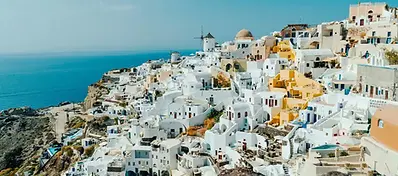
⪢ Santorini: Known for its whitewashed houses and blue-domed churches overlooking the caldera, Santorini is Greece’s postcard island. Beyond its famous sunsets, it offers volcanic beaches, wineries, and archaeological sites.
💡 Tip: Head to Pyrgos village for a quieter, authentic alternative to Oia’s crowded sunset spots.


⪢ Crete: The largest island in Greece, Crete has it all: sandy beaches, rugged mountains, historic ruins, and lively towns. Highlights include Knossos Palace, Samaria Gorge, and the Venetian harbor of Chania.
💡 Tip: Rent a car if you can — Crete is large, and public transport won’t reach all its best spots.
⪢ Meteora: This UNESCO World Heritage Site features monasteries perched atop dramatic rock pillars. It’s a breathtaking combination of nature and spirituality.
💡 Tip: Dress modestly for monastery visits. Women need skirts, and men should wear long trousers.
Find the Best Deals on Top Hotels in Greece


⪢ Delphi: Once considered the center of the ancient world, Delphi is home to the Temple of Apollo and a fascinating archaeological museum. The mountain backdrop adds to the site’s majesty.
💡 Tip: Go with a guide if possible — the myths and stories bring the ruins to life.
⪢ Mykonos: Famous for its nightlife, chic beaches, and windmills, Mykonos is the cosmopolitan party capital of the islands. Yet, its old town still retains charm with narrow alleys and whitewashed houses.
💡 Tip: Stay in Mykonos Town for nightlife or on the quieter north coast for relaxation.


⪢ Rhodes: Rhodes combines medieval history with stunning beaches. Its Old Town, a UNESCO site, boasts stone walls, cobbled streets, and the Palace of the Grand Master.
💡 Tip: Explore Lindos for its acropolis and sea views; it’s less crowded than Rhodes Town.
⪢ Mount Olympus: The legendary home of the gods is now a popular hiking destination. Trails range from gentle walks to serious treks toward the summit.
💡 Tip: Start hikes from Litochoro village, the gateway to Olympus National Park.
Transportation in Greece
Greece’s geography, with its mix of mainland and hundreds of islands, makes transport an adventure.
While the road and ferry networks are well-developed, journeys can vary from efficient trains and flights to scenic but slower island-hopping ferries.
Travelers should plan according to both time and budget.
Sign up and save 30% off your first private car hire
Turo is the world’s largest car sharing marketplace, from a community of trusted hosts across the US, UK, Canada, Australia & France.
SAVE $30 CAD when you spend $230
Book your first trip with Expedia as a NEW USER, be it for a hotel, car rental or flight and get a $30 discount, no strings attached!
Air Travel
Flying is the fastest way to cover long distances, especially between Athens and the islands.
Aegean Airlines, Olympic Air, and Sky Express offer frequent domestic routes.
Larger islands like Crete, Rhodes, and Santorini have airports, while smaller islands may be served by regional flights.
💡 Tip: Book early in summer — flights to popular islands sell out quickly and become expensive.
Buses
Intercity buses are the backbone of mainland transport, run by regional companies under the KTEL network.
They are modern, comfortable, and affordable, connecting Athens to almost every city and town.
Buses also reach many ferry ports for onward island travel.
💡 Tip: Buy tickets in advance for long routes like Athens–Thessaloniki, especially in peak season.
Private Taxis
Taxis are common in cities and tourist areas, though fares can add up.
In Athens, taxis are yellow and metered, while elsewhere they are usually silver.
Apps like Beat (a local Uber-style app) are widely used in Athens and Thessaloniki, while Uber operates only with licensed taxis.
💡 Tip: Always confirm the meter is running. Flat rates apply only for trips to and from airports.
Motorbikes & Scooters
Scooters, motorbikes, and quad bikes are popular ways to explore islands.
Rental shops are easy to find in places like Santorini, Mykonos, and Crete.
Cycling is less common due to hills and traffic, though it’s possible in flatter areas like the Peloponnese or on quiet islands.
💡 Tip: Helmets are legally required, and police do issue fines — always wear one, even if locals don’t.
Trains
Greece’s train network is limited but useful on certain mainland routes.
Trains connect Athens with Thessaloniki, Larissa, and some smaller towns.
The high-speed line between Athens and Thessaloniki cuts travel time to around 4 hours. Outside these routes, rail coverage is minimal.
💡 Tip: Reserve seats on Athens–Thessaloniki trains during weekends and holidays.
Shared Taxis
Shared taxis (synaftia) exist in some regions but are less common than in Asia or the Middle East.
In rural areas or smaller towns, locals sometimes share cabs for convenience on fixed routes.
They are cheap but not widely advertised.
💡 Tip: Ask at bus stations if shared taxis operate locally — they can save time when buses are infrequent.
Ferries & Boats
Ferries are the lifeline of Greece, connecting the mainland with its many islands. Options range from fast catamarans to slower but cheaper conventional ferries.
Piraeus, Rafina, and Lavrio are Athens’ main ferry ports. Island-hopping is easy, but schedules vary by season.
💡 Tip: Book ferry tickets in advance for summer and always check for weather cancellations — high winds can stop sailings.
Car Rentals
Renting a car is the best way to explore the mainland or larger islands like Crete.
Roads are generally good, though mountain routes can be winding and narrow.
Rentals are affordable, but manual transmission cars are the standard.
💡 Tip: Book early if you need an automatic car — they are in high demand but limited in supply.
Tips for Driving in Greece
Driving is often the best way to explore rural areas and islands, but conditions require caution.
● Vehicles drive on the right-hand side.
● Roads in villages and mountains are narrow and winding.
● Drivers can be fast and aggressive, especially in cities.
● Parking is often limited in Athens and island towns.
● Road signs are in both Greek and English on major routes.
💡 Tip: Avoid driving in central Athens — traffic and parking are notoriously difficult.
Tips for Using Public Transport in Greece
Public transport is affordable and widely available in cities and across the mainland.
● Athens has a modern metro, trams, and buses, all using rechargeable transport cards.
● Intercity buses (KTEL) cover almost every major destination.
● Ferries are reliable but slower than flights for long distances.
● Taxis are cheap for short city trips, especially when using apps like Beat.
● In rural villages, buses may run only a few times per day.
💡 Tip: In Athens, use the metro to get from the airport to the city. It’s faster and cheaper than a taxi.
Visa Requirements for Greece
As a member of the Schengen Zone, Greece follows standard European Union visa rules.
This makes it straightforward for many travelers, but requirements vary depending on nationality and the purpose of the visit.
Visa Options
Greece offers a variety of visa entry methods:
● Visa-Free Entry: Citizens of EU/EEA countries and over 60 non-EU countries (including the US, UK, Canada, Australia, and Japan) can enter Greece visa-free for up to 90 days within a 180-day period.
● Schengen Visa (Type C): For nationalities requiring a visa, valid for up to 90 days for tourism, business, or family visits.
● National Visa (Type D): For stays longer than 90 days, such as study, work, or family reunification.
● Transit Visa: For travelers passing through Greece en route to another Schengen or non-Schengen country.
💡 Tip: Keep in mind that days spent in other Schengen countries count toward your 90/180-day limit.
Types of Visa
Depending on the purpose of the visit, Greece issues different visa types under the Schengen framework.
● Tourist Visa: For leisure, sightseeing, and short-term family visits.
● Business Visa: For attending conferences, meetings, or trade events.
● Student Visa: For academic study at Greek institutions.
● Work Visa: For employment with Greek companies or long-term professional projects.
● Family/Partner Visa: For joining close relatives residing in Greece.
● Transit Visa: For those connecting via Greek airports or ports without entry permission.
💡 Tip: Long-term visas (Type D) are a stepping stone toward applying for a residence permit.
General Visa Application Requirements
For non-visa-exempt travelers, the application process follows standard Schengen guidelines.
● A valid passport issued within the last 10 years, with at least 3 months’ validity beyond departure.
● Completed Schengen visa application form.
● Recent passport-sized photographs.
● Proof of accommodation (hotel booking or invitation letter).
● Proof of travel (itinerary or round-trip flight ticket).
● Payment of visa fee (varies by type and method of application).
● Proof of sufficient funds (bank statements or sponsorship letter).
● Travel medical insurance (minimum coverage of €30,000 for medical emergencies).
💡 Tip: Apply at least 15 days before travel — earlier during peak summer season, when embassies handle more applications.
Additional Things to Keep in Mind
● Applications must be lodged at the Greek embassy or consulate in your country of residence.
● Holders of valid Schengen visas issued by other member states can also enter Greece.
● Overstaying Schengen rules can result in fines, deportation, or bans from re-entry.
● Biometric data (fingerprints) is required for Schengen applications.
● ETIAS (European Travel Information and Authorization System) is expected to launch soon, requiring online registration for visa-free travelers.
💡 Tip: Keep digital and paper copies of your documents — border officials may ask for proof of accommodation or onward travel.
Please note that these are general requirements, and specific documentation and criteria may vary depending on your circumstances and the visa category you are applying for.
This information is also subject to change at any time and has been obtained through research.
We always recommend you visit the official website of the Ministry of Migration and Asylum for the most up-to-date and detailed information regarding visa requirements.
Weather & Climate in Greece
Greece’s climate is famously Mediterranean, with hot, dry summers and mild, wetter winters.
Its many islands, mountain ranges, and coastal regions create noticeable regional variations, so the experience can differ greatly depending on where you travel.
Seasons
Each season in Greece brings its own charm and travel style.
● Spring (March–May): Pleasant temperatures, wildflowers, and fewer crowds.
● Summer (June–August): Hot and sunny, with average highs of 30–35°C (86–95°F), perfect for beaches but intense for city sightseeing.
● Autumn (September–November): Warm, with harvest festivals and great conditions for cultural trips.
● Winter (December–February): Mild in lowlands, cold and snowy in the mountains — ideal for skiing.
💡 Tip: Spring and autumn are ideal for sightseeing and island-hopping without the summer rush.
Regional Variations
The weather can differ widely across Greece due to its geography.
● Islands (Cyclades, Dodecanese): Hot, windy summers and mild winters.
● Athens & Attica: Long, dry summers with occasional heatwaves.
● Northern Greece (Macedonia, Thessaloniki): Colder winters, some snowfall.
● Peloponnese: Mediterranean climate, slightly wetter in winter.
● Mountain Regions (Epirus, Thessaly): Alpine conditions with heavy snow in winter and cooler summers.
💡 Tip: The Meltemi winds in the Aegean provide relief from summer heat but can disrupt ferry travel.
Annual Rainfall
Rainfall is moderate overall but varies by region.
● The wettest months are November to March, particularly in western Greece.
● Athens averages about 400 mm annually, while western regions get much more.
● Islands receive little rain during summer, often experiencing long dry spells.
● Mountain areas see heavy snow in winter.
● Rain is rare in July and August across most of the country.
💡 Tip: If traveling in winter, pack layers and waterproofs — mountain regions can be very wet or snowy.
Humidity
Humidity in Greece is usually moderate, but it can feel high on the islands.
● Summer: Coastal areas are humid, especially in the evenings.
● Athens: Can feel stifling due to a mix of heat and urban density.
● Islands: Breezier, though humidity is still noticeable.
● Mountains: Generally dry and crisp year-round.
● Winter: Humidity is higher, with damp, cool conditions in coastal regions.
💡 Tip: Carry electrolyte packets in summer as they help beat dehydration during long sightseeing days.
Best Time to Visit
The best time depends on the balance between weather and crowds.
● May–June: Excellent for sightseeing and pleasant beach weather.
● September–October: Warm seas, cultural festivals, and fewer tourists.
● July–August: Best for beach lovers and nightlife, but the busiest and hottest.
● Winter (Dec–Feb): Ideal for skiing or cultural city breaks in Athens and Thessaloniki.
● Year-round: Greece’s cities and larger islands remain lively.
💡 Tip: September is a sweet spot — warm weather, swimmable seas, and fewer crowds.
Be Prepared
Preparation helps make the most of Greece’s climate.
● Sunscreen, hats, and light clothes are essential in summer.
● Comfortable shoes are a must for exploring ancient ruins.
● Always check ferry schedules — summer winds or winter storms can affect crossings.
● A light jacket is useful even in summer evenings, especially in windy islands.
● Bring layers if visiting northern Greece or the mountains in winter.
💡 Tip: If you’re island-hopping, pack for variety — swimsuits for beaches but also a jacket for cool, windy nights.
Travel Resources
Book Your Transport E-Tickets with 12Go
12Go specializes in transportation options in Southeast Asia and Europe, offering a wide range of travel choices including trains, buses, ferries, and even flights.
Discover the World with Klook!
Unforgettable experiences await with Klook, your go-to platform for booking amazing activities, attractions, and transportation worldwide.
Need the Perfect Travel Resources? We've Got You Covered!
Over the past four years of full-time travel, we've booked countless accommodations, flights, and activities while also navigating the world of earning online.
These are the tools we rely on to plan and book our adventures, and now, you can too!
GigSky eSIM: World Mobile Data
International eSIM Data Plans. Local Prices. No Roaming. Fastest Networks. Available in over 200 countries, with GigSky you’ll have cellular data the moment you arrive.
Save 10% on your first order with code CLOSERLIVES10
Save Big on Your Next Adventure
🌍 Discover the Closer Lives Resource Hub: Built from 4 years of full-time travel experience. From trusted eSIMs and hotel tools to money-saving cards, teaching online, and blog monetization, we share only what we use ourselves. Explore, earn, and travel smarter with our curated picks.
✈️ Cheap Flights: Get fantastic deals on flights and transport.
🛏️ Save on Local Accommodation: Get top deals on budget hostels and luxury hotels.
🎟️ Tours, Tickets, and Activities: Skip the hassle and book in advance.
🏨 Flexible Hotels: Save more with Member Prices and get free cancellations.
🏠 Rent your Property Confidently with Vrbo: Over 2 million bookable vacation rentals across an array of rental property types.
👀 Read Reviews, Compare & Book Deals! Plan your perfect trip with the world's largest travel site.
🩺 Insurance for Nomads: Nomad Insurance covers extended travel and health worldwide. Choose from two coverage levels based on your needs.
Please note that at no additional cost to you, we may earn a commission from purchases made through these links.
For more information, see our Affiliate Disclosure.
FAQ's
Most Frequently Asked Questions about Greece
- 01
Greece is part of the Schengen Area.
Travelers from the EU, UK, US, Canada, Australia, and many other countries can enter visa-free for up to 90 days within a 180-day period.
Longer stays require a visa.
👉 See more in our Visa Requirements section.
- 02
Spring (April–June) and autumn (September–October) are the best times, with warm weather and fewer crowds.
Summer (July–August) is hot and busy, while winter is cooler but offers fewer tourists and lower prices.
👉 See more in our Weather & Climate section.
- 03
Yes, Greece is very safe for visitors.
Petty theft can occur in crowded areas such as Athens, especially around metro stations and tourist attractions.
Follow normal precautions to keep belongings secure.
👉 See more in our Health & Safety section.
- 04
Greece uses the euro (EUR).
Credit and debit cards are widely accepted, but it’s useful to carry cash in small towns and on islands where card facilities may be limited.
ATMs are easy to find in cities and popular destinations.
👉 See more in our Currency section.
- 05
Wi-Fi is common in hotels, cafes, and restaurants.
Local providers such as Cosmote, Vodafone, and Wind offer SIM cards with good coverage. eSIMs are a convenient choice for travelers.
👉 See more in our Connectivity section.
- 06
Domestic flights and ferries connect the islands to Athens and other ports.
Buses serve towns and rural areas, while trains operate mainly in the north.
Renting a car or scooter is popular on islands and in rural regions.
👉 See more in our Transport section.
- 07
Highlights include Athens’ Acropolis, the islands of Santorini, Mykonos, and Crete, the monasteries of Meteora, and the historic sites of Delphi and Olympia.
👉 See more in our Places to Visit section.
- 08
Hospitality is central to Greek culture.
A warm greeting is appreciated, and sharing food is common.
Dress modestly when visiting churches and monasteries.
Tipping 5–10% in restaurants is customary.
👉 See more in our Culture & Customs section.
- 09
Tap water is safe to drink in Athens and many mainland cities, but on some islands it may not be recommended.
Bottled water is inexpensive and widely available, so it’s the safer option in rural and island regions.
👉 See more in our Health & Safety section.
- 10
Ferries are the most popular way to travel between islands, with frequent routes in the summer months.
High-speed ferries save time but cost more.
Domestic flights also connect major islands to Athens.
👉 See more in our Transport section.
YOUTUBE
Discover more from Europe and join 15k+ on our YouTube channel at Jenn & Leon
Europe
Europe


How to take the bus from Tirana, Albania to Lake Ohrid, North Macedonia BORDER CROSS 4K TRAVEL VLOG!

Germany’s Most Beautiful City? 🇩🇪 Exploring Schwerin & Its Fairytale Castle

Is Lake OHRID the BEST lake holiday destination in the Balkans?

Our First Impressions of Tirana, Albania! We were SHOCKED!
As entrepreneurs and full-time slow travellers our goal is to see as much of this beautiful planet as we can!
By subscribing to our channel you will get notified of our latest videos, so you will never miss out!
Country Guides
Check out our other comprehensive Country Guides with all you need to know before you go, including our latest posts, must-see places, interesting facts, and key information about health & safety, transport, local customs, cuisine, connectivity, visa information, useful links and much more!
Our Engagement Story
Discover Aphrodite’s Rock, the legendary birthplace of the goddess of love, and our engagement spot! Find out more about our story, how it all happened, and all you need to know about visiting this incredible location (and also Leon's ancestral homeland).
Jenn & Leon at Closer Lives
We plan to see, learn, love and share as much of the world with others as possible.
That is why we created Closer Lives, to create a community for like-minded individuals and to help bring the world a little closer together through poetry, history, storytelling, healing, art, purpose and togetherness.
If you'd like to join us please sign up to our website; the social part is still in the process of being developed but currently you are able to post, share and interact. We'd love to have you here with us!
PLUS when you sign up you will receive a welcome bonus of 20% off ANYTHING from our Travel & Lifestyle Emporium.
Shop our inspirational range of suitcases, backpacks, phone cases, clothing and more, exclusively designed by us, with worldwide delivery.