

Inverlochy Castle: The Final Ruins of Our Scotland Road Trip

Updated: Aug 28
After exploring Urquhart Castle on the shores of Loch Ness, we thought our impromptu weekend Scotland road trip was coming to an end.
Our home in Bedford was waiting hundreds of miles to the south, but there was still one more itch to scratch. We were not ready to leave Scotland behind just yet.

Before beginning the long drive home back to England, we decided to squeeze in one final castle.
What followed involved a wrong turn, an unexpected visit to one of Britain's most famous luxury hotels, and the discovery of a remarkably preserved medieval fortress that became the perfect final chapter of our Scottish adventure.
Built around 1280 by John Comyn, Lord of Badenoch, Inverlochy Castle is one of Scotland's best-preserved medieval castles, in the sense that it has never really been renovated, meaning it is as close to the original as you can get.
Almost hidden beside the River Lochy, near Fort William, its thick stone walls have survived remarkably intact for more than seven centuries, witnessing battles, changing dynasties, and the turbulent history of the Highlands.
When we visited in April 2019, the castle was completely free to explore and open to the public.
Today, however, access has been restricted while Historic Environment Scotland carries out safety inspections, making our visit feel even more special in hindsight.

Key Takeaways
● What to know: Built around 1280 by John Comyn, Inverlochy is one of Scotland's best-preserved medieval ruins because it has never been extensively rebuilt.
● Our experience: After accidentally reaching Inverlochy Castle Hotel first, we found the ruins and made them the final, memorable stop of our Scotland road trip.
● Useful detail: When we visited in April 2019, the castle was completely free to explore and open to the public.
In This Post...
See More...
Our Highlights
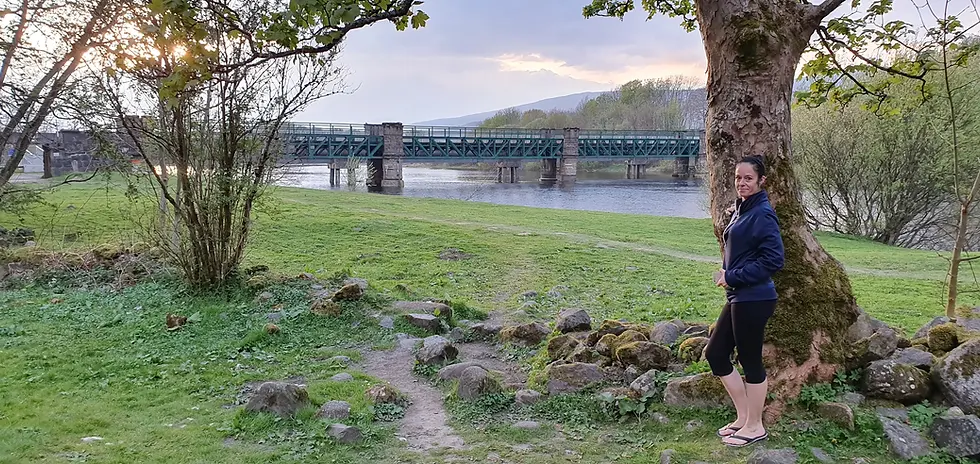
By the time we reached Inverlochy Castle, we had already spent days exploring some of Scotland's most fascinating historic places.
From the historic streets of Edinburgh and the mysteries of Rosslyn to the castles of the Cairngorms, the royal grounds of Balmoral, the dramatic viewpoints of the Highlands, and the iconic ruins of Urquhart Castle on Loch Ness, this journey had already given us countless unforgettable memories.
The Castle We Nearly Missed

The most memorable part of our visit happened before we even reached the castle.
Like many visitors, we entered "Inverlochy Castle" into our GPS and followed the directions. Before long, we found ourselves pulling into the grounds of the luxurious Inverlochy Castle Hotel.
The surroundings were beautiful, but something felt wrong. Where was the medieval castle?
After wandering around briefly and realizing we were definitely not in the right place, we returned to the car and continued searching. At the time, Google Maps was not as clear as it is today.
Eventually, we found ourselves traveling down a narrow country lane with woodland on one side, a cemetery on the other, and a small bridge crossing the River Lochy before finally arriving at the actual castle.
Exploring the Atmospheric Ruins

What was most surprising, however, was not the history but the mood of the place.
Inverlochy Castle was worn yet seemed far bigger than we had imagined. Much of the upper structure has long since vanished, and the corner towers are only remnants of their former glory, but the size is still obvious.
We were surprised by the thickness of the walls and the amount of stone that persists after more than seven centuries, next to the imposing curtain walls.
One thing that really stuck out to us was that the arched entranceway is in amazing shape. Walking beneath it was like stepping into another age, especially when we knew that hundreds of years before us, the same entrance would have been trodden by generations of troops, lords, merchants, and visitors.
Also, there was something unexpectedly romantic about the castle. There were no crowds, no ticket office, and no one else in sight as far as we could remember, and it felt like we had the whole place to ourselves.
Ancient ruins, Highland scenery, and the serene River Lochy flowing close by provided a peaceful, introspective environment.
Walking through the vacant courtyard and around the external walls, we couldn’t help but think what a lovely setting it would make for a wedding!
Walking the Outer Walls and Riverbank

Most visitors understandably focus on the castle itself, but for us, roaming around the outside of the walls was just as memorable.
The River Lochy runs along the ruins, and it is well worth taking the time to walk right around the outer circumference of the castle for a very different view.
It is considerably easier to comprehend the real scale of the stronghold from beyond the walls. The stone curtain walls tower above the surrounding terrain, providing a glimpse of how intimidating Inverlochy must have looked to anybody coming in medieval times.
We went across the grounds, pausing to see various views of the castle. One minute we were staring up at the remaining towers and picturing what the fortress may have been like in its glory days.
Next we were near the still waters of the river, watching the reflections, the foliage, and the tranquil Highland environment.
It also happened to be one of the quietest castle visits of our entire Scotland road trip. No crowds, no tour groups, no interruptions. You only hear the river, the odd song of a bird, and old stone walls standing silent against the background of the Highlands.
Ending Scotland on a High

There was something fitting about ending our Scotland road trip here. No crowds. No ticket office. No gift shop. Just ancient ruins, Highland scenery, and a sense of quiet reflection before beginning the long drive south.
There is a serene beauty to Inverlochy that is easy to comprehend once you are standing there yourself.
The Epic History of Inverlochy Castle

Inverlochy Castle was built approximately in 1280 by John Comyn, Lord of Badenoch, one of the most powerful of the medieval Scottish nobles.
The Comyn family was one of the wealthiest and most powerful families in the realm, and Inverlochy was part of a bigger network of castles, which helped to consolidate their rule across Scotland.
The position of the castle was purposeful. It was at the southern gateway to the Great Glen, overlooking the River Lochy, and guarded an important route through the Highlands used by traders, travelers, and armies.
Inverlochy is unlike a lot of Scottish castles in that it was built with a unique quadrangular form with four massive towers on the corners joined by thick curtain walls.
The walls, around 10 meters high, were built to withstand the tactics of medieval warfare, such as the use of scaling ladders and direct attacks.
The First Battle of Inverlochy (1297)

Inverlochy became entangled in the battle between Scotland and England in the Wars of Scottish Independence.
In 1297 soldiers loyal to William Wallace clashed with allies of the English monarch near the castle in what became known as the First Battle of Inverlochy.
The Wars of Independence
Scotland was at war for the first half of the 14th century. Their struggle with Robert the Bruce eventually saw the Comyn family ousted from power.
Bruce established control of Scotland and in the process conquered or destroyed many Comyn castles. Inverlochy survived remarkably well.
The Second Battle of Inverlochy (1645)
Three centuries later Inverlochy was again the scene of battle. The Marquis of Montrose won one of the most famous triumphs in Scottish military history in the Second Battle of Inverlochy, 1645, in the Wars of the Three Kingdoms.
Outnumbered, Montrose's men were quite effective, winning a decisive Highland victory over the Covenanter army.
Victorian Interest

Like many Scottish ruins, Inverlochy was of increased interest in the Victorian era. It had a lovely look, which appealed to tourists, and even in 1873 plans were made for a visit of Queen Victoria.
However, the histories suggest that the queen was less than impressed, saying there was little to see.
Modern tourists, we for one, could dispute that! No disrespect to the queen's opinion, of course. Each to their own and all that!
10 Interesting Facts About Inverlochy Castle

1. Inverlochy Castle was built around 1280: The castle was constructed by John Comyn, Lord of Badenoch, during a period when powerful Scottish noble families competed for influence and control throughout the kingdom.
More than 700 years later, much of that original structure still survives.
2. It is one of Scotland's best-preserved medieval castles: Unlike many Scottish castles that were extensively rebuilt, modernized, or converted into stately homes, Inverlochy retains much of its original medieval layout, allowing visitors to experience a fortress that looks remarkably similar to how it would have appeared centuries ago.
3. Three battles were fought around the castle: Its strategic position at the southern entrance to the Great Glen made Inverlochy an important military stronghold.
Over the centuries, three separate battles took place in the surrounding area, including the famous Battle of Inverlochy in 1645.
4. The castle once controlled a vital Highland route: Anyone travelling through the Great Glen during the medieval period would have passed near Inverlochy.
The castle's location allowed its owners to monitor movement, trade, and military activity through one of Scotland's most important natural corridors.
5. The walls were designed to defeat medieval siege tactics: Standing approximately ten meters high, the angled curtain walls were specifically built to make scaling ladders less effective.
Even today, their sheer size and thickness remain one of the most impressive aspects of the castle.

6. Inverlochy was home to one of Scotland's most powerful families: The Comyn family ranked among the most influential noble dynasties in medieval Scotland.
Their extensive network of castles helped them secure political power across large parts of the country before their eventual downfall during the Wars of Scottish Independence.
7. Archaeologists have uncovered medieval artifacts on the site: Discoveries at Inverlochy have included armor-piercing arrowheads, riding spurs, and other objects dating back to the 1200s and early 1300s, providing valuable insight into life within the castle during its active years.
8. Queen Victoria visited the castle area in 1873: Like many Victorian travelers, Queen Victoria was fascinated by Scotland's romantic ruins.
Although preparations were made for her visit, historical accounts suggest she was less impressed than expected and reportedly remarked that there was little left to see.
9. Many visitors accidentally end up at the wrong castle: The nearby Inverlochy Castle Hotel is one of Britain's most prestigious luxury hotels, and its similar name often causes confusion.
We made exactly the same mistake before eventually finding the medieval ruins we were actually looking for.
10. Our visit captured a piece of history that can currently not be experienced: When we visited in April 2019, visitors could freely walk through the ruins, climb sections of the surviving towers, and explore the grounds.
Since 2022, access has been restricted due to safety concerns, making our experience a glimpse into a version of Inverlochy that many travelers cannot enjoy at this time.

Ticket Information
When we visited in April 2019, entry was completely free.
There was no ticket office, visitor center, or payment required. Visitors could simply park nearby and explore at their own pace.
⚠️ At the time of writing, access to the castle remains restricted due to safety concerns. Always check the official Historic Environment Scotland website before traveling.
Open Hours & When to Go
We visited around 4pm on a spring afternoon, and the combination of soft light, dark clouds, and near-total silence made the experience particularly memorable.
Opening Hours
When access is permitted, Inverlochy Castle is generally accessible throughout daylight hours.
Best Time to Visit
🌸 Spring (March-May):
Fresh greenery, fewer visitors, and excellent photography conditions.
🔆 Summer (June-August):
Long daylight hours and warmer temperatures.
🍂 Autumn (September-November):
Atmospheric colors and quieter surroundings.
❄️ Winter (December-February):
Dramatic skies but shorter daylight hours.
How to Get There
Inverlochy Castle is located just outside the town of Fort William in the Scottish Highlands, a short distance from the A82.
To get there, you will turn off the main road and follow a quiet country lane, passing a cemetery on one side and woodland on the other before crossing a small bridge over the River Lochy.
By Car (Best Option)
If you're traveling by car, Inverlochy Castle is around a 5-minute drive from Fort William, approximately 2.5 hours from Glasgow, and around 3 hours from Edinburgh.
Having your own vehicle is by far the easiest way to explore this part of the Highlands, especially if you're combining the castle with other attractions along the A82.
⪢ Parking
Free parking is available out-front, but spaces are limited.
Car Rental
If you want more flexibility on your trip, consider renting a car or scooter from nearby Fort William.
We recommend comparing options and booking through Rentalcars.com for a wide range of trusted providers.
By Public Transport
Fort William railway station and bus services provide connections from Glasgow, Edinburgh, and Inverness.
From Fort William, a taxi is the most practical option
🎟️ More Things to Do Near Inverlochy Castle
While Inverlochy Castle itself does not offer guided tours, Fort William is one of the most popular adventure bases in the Highlands. You can explore Ben Nevis, take boat trips on nearby waters, or discover more of the dramatic scenery surrounding the Great Glen.
Contact Information for Inverlochy Castle
Address
Fort William PH33 6TF, United Kingdom
Where to Stay

Widely regarded as one of the finest luxury hotels in the United Kingdom, Inverlochy Castle Hotel occupies a beautiful estate near the medieval ruins.
Although we mistakenly arrived there while searching for the castle itself, the impressive grounds and Highland setting made the detour worthwhile.
For travelers seeking a luxury stay near Fort William, this hotel remains one of Scotland's most prestigious experiences.
Sneaking in a quick selfie while exploring the stunning grounds. The stunning exterior of the luxurious Inverlochy Castle Hotel.
If you would prefer somewhere else, there are a number of good options in nearby Lochyside, which is just a 3-minute drive from the castle.
Use our interactive map below to search and compare options from top providers in the area.
Tips for Visiting

Here are a few practical tips to help you on your way:
● Check access restrictions before traveling if you are hoping to go inside. Access has been restricted for several years due to safety concerns.
● Visit during daylight hours for the best photography. The ruins are unsurprisingly photogenic.
● 30-45 minutes should be plenty of time to allow for a comfortable visit.
● Walk around the outside of the walls as well as viewing the interior.
● Spend time along the River Lochy. It is a beautiful stroll, especially if the weather is on your side.
● Wear suitable footwear, especially if paths are wet. Pathways are uneven in areas.
● Combine Inverlochy with a visit to Fort William or Glen Coe if you are on a day out.
● Don't confuse the castle with Inverlochy Castle Hotel like we did, although it is worth checking out the grounds if you do!
● Take time to appreciate the scale of the epic castle walls. Their survival after more than 700 years is really remarkable.
Our Experience Rating:
Old Inverlochy Castle

Inverlochy Castle was not the grandest castle we visited in Scotland, nor was it the most famous. Yet there was something about it that stayed with us long after we left.
Perhaps it was the silence. Perhaps it was the knowledge that much of what we were seeing had stood here since the 13th century.
Or perhaps it was simply the feeling of stumbling across a place that most travellers seem to overlook.
The castle felt larger than expected, more atmospheric than anticipated, and surprisingly romantic thanks to the complete lack of crowds.
Walking through the ruins, climbing a small section of one surviving tower, and standing beside the River Lochy gave us a genuine sense of connection to the site's history.
As the final stop of our Scotland road trip, Inverlochy could not have been more fitting. It was quiet, authentic, and memorable.
A really nice place to reflect on an unforgettable journey before the long drive home!
For more inspiration, browse our complete collection of Scotland travel guides and road trip stories.
FAQ: Inverlochy Castle
Where is Inverlochy Castle?
Inverlochy Castle is located near Fort William in the Scottish Highlands beside the River Lochy.
Who built it?
The castle was built around 1280 by John Comyn, Lord of Badenoch.
Is it older than Urquhart?
Both castles have medieval origins, though Inverlochy's surviving structure largely dates from the late 13th century.
Is Inverlochy currently open?
Access has been restricted since 2022 due to safety inspections. Check current information before visiting.
Is there an entry fee?
Historically, entry was free when the castle was accessible.
How long should I spend?
Around 30-45 minutes is usually sufficient.
Can I climb the towers?
When we visited in 2019, access to parts of the towers was possible. Current restrictions prevent this.
What battles took place there?
Three battles are associated with the site, including the famous 1645 Battle of Inverlochy.
Is the Castle Hotel the same place?
No. The luxury hotel and medieval castle are separate locations, 2 miles apart.
Is the castle worth visiting?
Absolutely. Even with current restrictions, the castle remains one of Scotland's most atmospheric medieval ruins and an important part of Highland history.
Related Reads
Urquhart Castle, Loch Ness: Ruins, Rivalries, and Dramatic Views
Our final major castle stop before reaching Fort William and Inverlochy.
Driving Through the Cairngorms? Do Not Skip Braemar Castle
An often-overlooked Highland castle that surprised us during our road trip.
Balmoral Castle: Scotland's Royal Highland Retreat
Discover the famous royal residence nestled within the Cairngorms.
Historic Edinburgh: Our Story in Scotland's Magical Gothic Capital City
The starting point of our unforgettable journey through Scotland.


Comments