

Azores Cruise Stop Guide: Our Regal Princess Day in the Azores

Updated: 2 days ago
After six days at sea, arriving in the Azores felt like a bit of a relief in our Regal Princess transatlantic crossing.
We stepped ashore in Ponta Delgada on São Miguel, grateful that we had actually managed to make this stop after hearing of the rough-water troubles that often affect arrivals here.
Another passenger had told us about four previous attempts that had been thwarted by high waves, so we appreciated the opportunity even more.
This was the port stop we were looking forward to the most, not only because the islands are absolutely stunning, but also because this would be our first visit to the nation of Portugal, even if it was not the mainland.
So, for country number 46, we joined two friends we had met on the ship, negotiated a trip with a taxi driver outside the cruise port, and set off together.
Portuguese architecture, dramatic coastal views, a working tea factory, and our first encounter with steaming geothermal pools turned this into a day we would rate as one of the best port stops we have experienced across 4 cruises!

Key Takeaways
● We visited Ponta Delgada on São Miguel during our Regal Princess transatlantic crossing on April 11, 2025.
● Four of us shared a locally arranged taxi tour costing €120 in total, or €30 each, at the time of our visit.
● Our route included Ribeira Grande, Santa Iria, the Gorreana tea factory, Pico do Ferro, and Furnas.
● We explored independently of the cruise line, with a friendly driver who shared local insights and waited at each stop.
● We rated this stop 5/5, with the two viewpoints and tea factory among our biggest highlights.
In This Post...
See More...
Our Visit at a Glance
Location
Ponta Delgada
São Miguel
Cruise Ship
Regal Princess
Princess Cruises
Tour Cost
€120 total
€30 each
Getting Around
Local taxi
(Four of us)
Visited
April 11, 2025
Port Type
Docked at Ponta Delgada
(8am - 5pm)
Explored
Ribeira Grande, Gorreana & Furnas
Our Rating
5/5
Our Highlights
Our day was a loop through very different sides of São Miguel, from town streets and coastal cliffs to tea fields and a volcanic valley.
Having one driver for the trip linked the stops together and gave us time to explore each area while he waited.
We were also happy for him to suggest where to go, and we must say, he picked really well.
Ponta Delgada and Ribeira Grande: Portuguese Architecture
Ponta Delgada was our arrival point, and Ribeira Grande was an early stop on our taxi trip.
We really loved the Portuguese architecture: white façades, dark stone detailing, and churches that encouraged us to stop and look properly rather than simply move on to the next viewpoint.
Jenn during our wander through Ribeira Grande. The Portuguese architecture was one of the pleasures of exploring Ribeira Grande. Ribeira Grande's riverside gardens added another side to our town stop. Ribeira Grande's town hall and clock tower. The patterned paving and colorful buildings of Ribeira Grande. A closer look at the church's decorative details. The richly decorated interior was another reason to pause and look around. One of the details we photographed while exploring Ribeira Grande.
SWIPE FOR MORE →
Our photographs include the ornate façade of Igreja do Espírito Santo, Nossa Senhora da Estrela church, and its richly decorated interior, as well as details of Ribeira Grande's streets and gardens.
These stops added another dimension to a day that could have been remembered for the island’s landscapes alone.
For a little context, Turismo de Portugal's church guide identifies Igreja do Espírito Santo as an 18th-century church with a distinctive Baroque façade.
Santa Iria: Atlantic Cliffs and Green Coastline
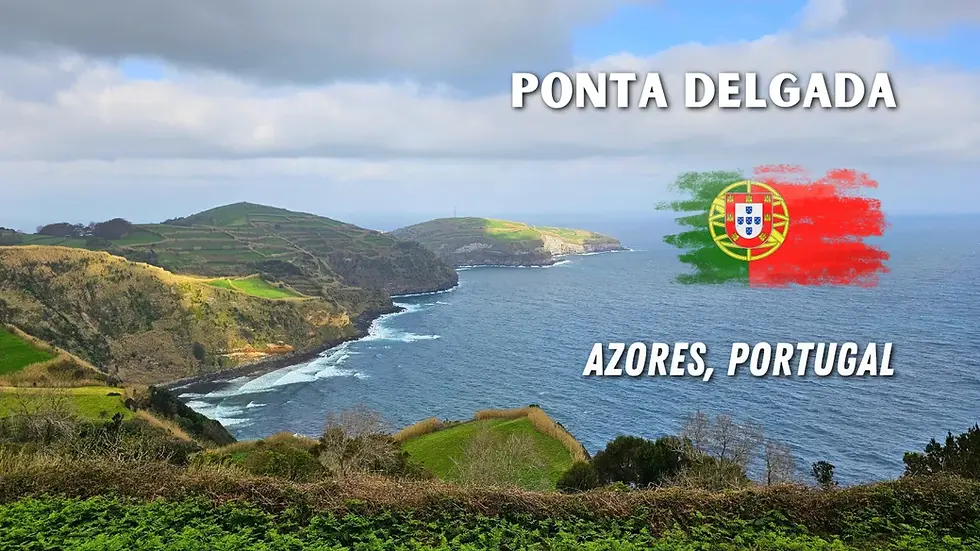
Santa Iria was one of our two standout viewpoints. Looking along the green cliffs and out across the Atlantic was absolutely stunning, and it was a very different perspective from the water and horizon we had become used to aboard Regal Princess after six straight sea days.

The appeal here was the sweep of the coastline, of course. The jagged cliffs and carpet-like grass tops made for a wonderful backdrop. Even the grey clouds look good with this view!
Our driver was well-versed in the best viewing points and was happy to let us take our time for photos and, of course, to absorb the magic of it all.
Gorreana: Seeing How Our Tea Is Made
We are tea lovers, so Gorreana had an immediate head start with us! Seeing the mechanics of a working tea factory was a real highlight.
Seeing the machinery and tea leaves being processed brought something we usually encounter in a cup back to the place and work behind it.
The rows of tea plants outside added to that experience. This was a chance to see both the landscape and the factory, rather than treating the plantation as a quick scenic photo stop.
Our first look across Gorreana's tea fields. A different perspective on the tea we love to drink. Arriving at the working Gorreana tea factory. The shop inside Gorreana's visitor area. The café area at Gorreana. The mechanics of the factory were a particular highlight for us as tea lovers. Seeing tea being handled and processed brought the factory visit to life.
SWIPE FOR MORE →
ℹ️ Planning note: Visits and tea tastings are free and do not require a reservation. See Gorreana's visitor information for more details.
Pico do Ferro: Looking Down Over Furnas
Pico do Ferro was the other viewpoint that really stood out for us. The view over Furnas Lake and the surrounding green valley was spectacular, and the change from Santa Iria's coastal panorama gave us a sense of just how varied São Miguel is.
Looking down over Furnas Lake before continuing into the valley. Jenn at our second standout viewpoint of the day. Pico do Ferro gave us a sense of the scale of the Furnas valley. One of the absolutely stunning views that made this day special.
SWIPE FOR MORE →
Seeing the lake from above also helped us put the next part of the trip into perspective.
Furnas became a landscape we could learn about as a whole before exploring parts of it at ground level (there are information boards up here).
Furnas: Steam, Bubbling Water, and That Smell!

The geothermal area in Furnas was our first experience of anything like this on our travels.
Steam rose from the ground and pools, and the rotten-egg smell was unmistakable. It was super smelly but also fascinating and absolutely part of what made the visit memorable.
We had seen plenty of beautiful landscapes before, but watching a place where the heat beneath the surface was so obvious felt completely different. This was one of those stops that engaged more than just our eyes!
Our first encounter with a geothermal area like this. The green gardens around Furnas offered a different view of the area. The mineral water springs added to our introduction to Furnas. A photo together at the geothermal pools, complete with that unforgettable smell! Jenn beside the steam in Furnas. Flowering paths beside the geothermal sights. Leon among the gardens in Furnas. Seeing heat and steam rising from the ground was a first for us.
SWIPE FOR MORE →
The Azores Geopark's Furnas overview explains the area's volcanic lake, fumaroles, and mineral and thermal waters.
ℹ️ Note: Fancy a soak in Furnas? If you want to add thermal bathing to your visit, these three spots offer different experiences:
Poça da Dona Beija
A popular option for an evening soak, with outdoor pools around 39°C (102°F) surrounded by greenery. Open until 11pm, although evening visits would suit those staying on the island.
Parque Terra Nostra
Ideal for combining a soak with a botanical garden visit. Its large, iron-rich thermal pool and extensive gardens make this somewhere to allow a few hours. Day visitors can enter between 10:30am and 4:30pm.
Octant Furnas Spa
For a little luxury, this hotel offers indoor and outdoor thermal pools and a hydrotherapy circuit. Access is complimentary for hotel guests, with paid access available for non-guests.
Furnas Lake: A Different Perspective at Ground Level
A moment together beside Furnas Lake. Furnas Lake at ground level after our view from Pico do Ferro.
SWIPE FOR MORE →
Our route also brought us to the shore of Furnas Lake. After seeing it from Pico do Ferro, here we were able to see a closer view of the water, wooded slopes, and surrounding landscape.
Together, the viewpoint and lakeside stop made a lovely pairing: one gave us the scale of the valley, while the other brought us down into it.
The History
São Miguel's Portuguese Roots
1444
Portuguese settlement on São Miguel began initially around Povoação before expanding to Vila Franca do Campo, the island’s first capital.
These early communities established the foundations of the towns, farming traditions, and religious heritage that visitors encounter today. Turismo de Portugal’s São Miguel guide provides a useful introduction to this period.
1507
Ribeira Grande developed its own identity on the north coast, receiving town status. Its river, mills, churches, and surrounding agricultural land helped establish it as another important center of island life.
Exploring its streets gave us a different perspective on São Miguel, beyond the volcanic scenery we had been so excited to see.
The contrast between white walls and dark volcanic basalt particularly caught our attention.
Alongside the church façades and decorative details, it gave the towns a distinctive Portuguese character, with the island’s volcanic origins visible even in the buildings.
1522
A devastating earthquake struck Vila Franca do Campo, marking an important turning point in the island’s history.
1546
Ponta Delgada subsequently became the capital and received city status from King João III on April 2, 1546. Its growing importance helped shape the churches, civic buildings, and historic streets that remain part of its appeal.
Furnas: A Landscape Shaped by Volcanic History
The green valley we admired from Pico do Ferro sits within the Furnas volcanic system, whose activity stretches back around 100,000 years.
Its landscape includes overlapping calderas, large depressions formed through volcanic activity, with Furnas Lake occupying part of the basin.
The volcano’s most recent eruption occurred in 1630, causing significant destruction and loss of life.
Today, its steaming vents, bubbling pools, and mineral springs reveal the continuing geothermal activity beneath this peaceful-looking landscape.
Knowing that history adds another dimension to the views from above and the experience of walking through Furnas itself.
Over time, local people have incorporated that heat into everyday traditions, from thermal bathing to cooking. The best-known example is cozido das Furnas, a stew of meat and vegetables cooked in pots buried in the hot ground near the lake.
Cooking typically takes around five to six hours, using the landscape itself as a slow cooker.
For us, seeing geothermal activity like this for the first time was fascinating. The unmistakable rotten egg smell certainly made an impression, but so did discovering how closely this volcanic environment connects with local life.
Gorreana's Tea Heritage
Gorreana began producing tea in 1883, during a period when São Miguel was looking for alternatives to its declining orange industry.
Citrus exports had brought considerable prosperity to the island, particularly through trade with Britain, so developing other crops became an important part of its agricultural story.
An important step came in 1878, when the island’s agricultural society brought two Chinese specialists to São Miguel to teach tea cultivation and processing techniques.
That knowledge helped establish the industry that Gorreana continues today. The local municipality records uninterrupted harvesting and processing at Gorreana since its foundation.
Gorreana describes itself as Europe’s oldest tea factory still in operation. Its history makes the factory visit particularly interesting, connecting the fields outside with generations of agricultural knowledge and production.
Exploring Independently
How We Arranged Our Taxi Tour
We arranged the trip with two friends we had met on Regal Princess. They were the same two friends we later traveled into Bruges with from Zeebrugge port, so this day became part of a wider shared cruise experience.
Outside the Ponta Delgada cruise port, we negotiated directly with a local taxi driver (there are many of them). The trip cost €120 in total, split between the four of us: €30 per person, or €60 for the two of us.
The driver took us to all the locations, gave us local and cultural insights along the way, and waited while we toured the areas. He was friendly and really helpful, and that made a big difference to the day.

Our Route Around São Miguel
Ponta Delgada → Ribeira Grande → Santa Iria viewpoint → Gorreana tea factory → Pico do Ferro viewpoint → Furnas village and geothermal area → Furnas Lake → Ponta Delgada.
Agree a realistic plan with your driver based on your ship's actual all-aboard time and the conditions that day.
ℹ️ Note: This is an account of our route, not a timed itinerary that every cruise visitor should try to reproduce
What to Agree With a Driver
Before leaving the port, agree on the total price for the vehicle and number of people, the planned stops, waiting time, any entrance or parking charges, the payment currency and method, and the time you need to be back.
Save the driver's contact details and make the return to the correct cruise berth part of the arrangement.
Sharing the fare worked very well for us. Another group may get a different quote, and the best-value option depends on the route, vehicle, and time available.
A prebooked operator or ship excursion can also suit travelers who prefer to settle those details in advance but is typically more expensive.
🎟️ Consider a Pre-Booked Tour
We loved the flexibility of our locally arranged taxi trip. If you prefer to organize your day before arriving, browse the tours below and check the pickup location, duration, and return time against your ship’s schedule.
⚠️ Check your ship’s timings: Tour options vary in length and may not suit every cruise itinerary. Before booking, confirm the pickup location and expected return time, allowing a comfortable buffer before your ship’s all-aboard time.
Tips for Visiting
Work Backward From All-Aboard
Use the time given by your ship, including whether ship time and local time differ. Leave a generous return margin rather than treating departure time as the moment to arrive at the port.
Keep the Route Flexible
Visibility matters at the viewpoints. If cloud hides the view, ask your driver whether changing the order is practical; a clear panorama cannot be guaranteed.
Give the Tea Factory Some Time
The machinery was one of our favorite parts. Plan enough time to look at the production areas rather than only stopping at the shop or taking a photograph of the fields.
Expect a Busy Attraction
Visitor reviews of Gorreana vary, but some report crowds and queues in the shop and café. Build in flexibility and avoid making a lengthy café stop essential to a tight return schedule.
Explore the Viewpoint Carefully
Reviews of Pico do Ferro mention different viewing positions. If conditions and mobility allow, look around the designated viewing area for different angles rather than stopping at the first gap.
Bring Layers and Comfortable Shoes
Our photos show a mixture of cloud and sunshine across the day. A light rain layer, comfortable footwear, and water and sun protection make sense for a trip combining towns, viewpoints, and outdoor stops.
Treat Geothermal Water as Sightseeing
Stay on marked paths and respect barriers around steaming ground and pools. Designated bathing facilities are separate from the geothermal sightseeing areas; follow local signs and staff guidance.
Choose Extras Around Your Priorities
A tea tasting, longer plantation walk, local meal, or booked thermal bath can be appealing additions, but each needs time. Check current opening arrangements and choose what matters most rather than adding every possibility.
Pack Swimwear You Don’t Mind Staining
If you plan to visit Furnas’s thermal pools, bring an old or dark-colored swimsuit. The iron-rich water can leave rusty stains on lighter fabrics, so rinse your swimwear promptly after bathing.
⚠️ The crowd and queue advice above draws on Gorreana visitor reviews. Experiences vary, so use those reports as planning pointers and allow flexibility for the day you visit.
ℹ️ For additional (viewpoint) perspectives, see Pico do Ferro visitor reviews. Reviews help identify practical considerations, while official visitor information should guide current access and opening arrangements.
Our Experience Rating
Azores, São Miguel

We were really grateful to come here, especially knowing there had been a possibility we would not make the stop.
The Portuguese architecture was great to see, Santa Iria and Pico do Ferro were absolutely stunning, and the tea factory was a particular pleasure for two tea lovers like us.
The geothermal pools were wonderfully unfamiliar, even with that unforgettable rotten-egg smell. Add a friendly, helpful taxi driver and friends to share the experience with, and this became one of those port days where the different parts fitted together beautifully.
For us, this was an excellent introduction to São Miguel. Our 5/5 reflects this particular day and experience, rather than a claim that a single cruise stop lets you see all of the Azores.
FAQ
Which Azores island did we visit?
We docked at Ponta Delgada on São Miguel on April 11, 2025, during our Regal Princess transatlantic cruise. This guide covers that island and our specific port day.
Can I explore independently?
Yes. We negotiated a private trip with a local taxi driver outside the cruise port and shared it with two friends from the ship. Agree the route, price, waiting arrangements and return time before setting off.
How much did our taxi cost?
Our April 2025 trip cost €120 for four people, making it €30 each or €60 for us as a couple. This is our recorded historical cost, not a current fixed rate or a quotation for future visitors.
What were our favorite stops?
The Santa Iria and Pico do Ferro viewpoints were particular highlights. We also loved seeing the mechanics of Gorreana tea factory, and Furnas was our first experience of a geothermal area like this.
Is the Gorreana tea factory free?
Gorreana currently advertises free visits and tea tastings without a reservation. Check its official visitor information before your trip. Leave time to see the working factory and tea fields as well as any tasting or shop visit.
Are these places walkable from the port?
Our full route spread across São Miguel and required road transport. A walk around Ponta Delgada is a different, more local plan. The taxi allowed us to combine Ribeira Grande, the viewpoints, Gorreana and Furnas.
Can I bathe in the geothermal pools?
The steaming geothermal sightseeing area should not be treated as a bathing area. Use only designated thermal bathing facilities and check current access, booking requirements and local guidance separately.
How much time do I need?
Plan around your ship's call and all-aboard time. Combining the viewpoints, tea factory and Furnas requires road transport and time at each stop. Agree a realistic schedule and return margin with your driver or operator, and shorten the route when necessary.
Is this route suitable for limited mobility?
Road transport can reduce walking between locations, but steps, slopes, cobbles and access differ by stop. Discuss your specific needs with the driver or operator and check individual venues before booking; we did not conduct a full accessibility assessment.
Was the Azores cruise stop worth it?
Absolutely for us: we rated it 5/5. The architecture, two viewpoints, working tea factory, geothermal sights and helpful driver made a varied and memorable day.

Comments