

Visiting Edinburgh Castle: Highlights, History, Tips & What to Expect

Updated: Sep 2
Driving on from our stroll in the Royal Botanic Garden Edinburgh, we headed into the city with a real sense of anticipation.
Edinburgh had already built itself up in our minds: gothic architecture, Harry Potter connections, a buzzing high street filled with bars, street performers, and, hopefully, the sound of bagpipes echoing through the streets.

At the beating heart of this buzzing city sits Edinburgh Castle. Perched dramatically on Castle Rock, it dominates the skyline in a way that feels almost unreal until you see it for yourself.
Even Leon, who had seen plenty of castles across England before meeting Jenn, hadn’t experienced anything quite like this. The closest comparison might be Arundel Castle, but even that doesn’t come close to this sheer elevation and presence.
We parked at the long-stay NCP Edinburgh Castle Terrace, an 11-minute walk along Johnston Terrace at the foot of Castle Rock, and made our way up to the castle, joining the steady flow of visitors heading toward the same destination on what turned out to be a busy Saturday afternoon.
Before even stepping onto Castle Hill, the energy of the place alone had already made the climb worth it.
In this post, we share what stood out from our visit, including the top highlights, historical context, ticket advice, and practical tips to help you plan your time at one of Scotland’s most iconic landmarks.

Key Takeaways
● At a glance: Edinburgh Castle rises above the city on Castle Rock, with the Crown Jewels, St. Margaret's Chapel, the One O'Clock Gun and rampart views among its main highlights.
● Our experience: Despite a busy Saturday afternoon, the Gothic architecture, layered history and views across Edinburgh made the climb worthwhile.
● Useful detail: We parked at NCP Edinburgh Castle Terrace, followed by an approximately 11-minute walk along Johnston Terrace to the castle.
Our Highlights
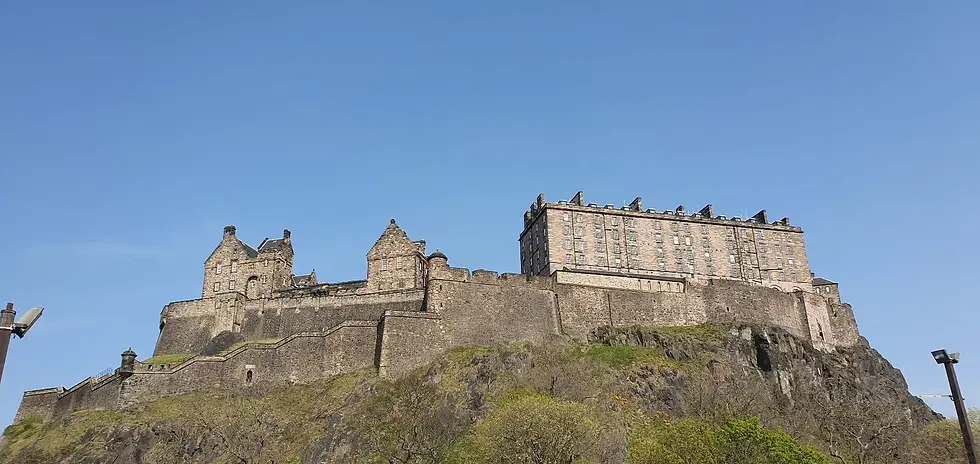
Stepping into Edinburgh Castle feels like stepping into centuries of Scottish history layered on top of one another.
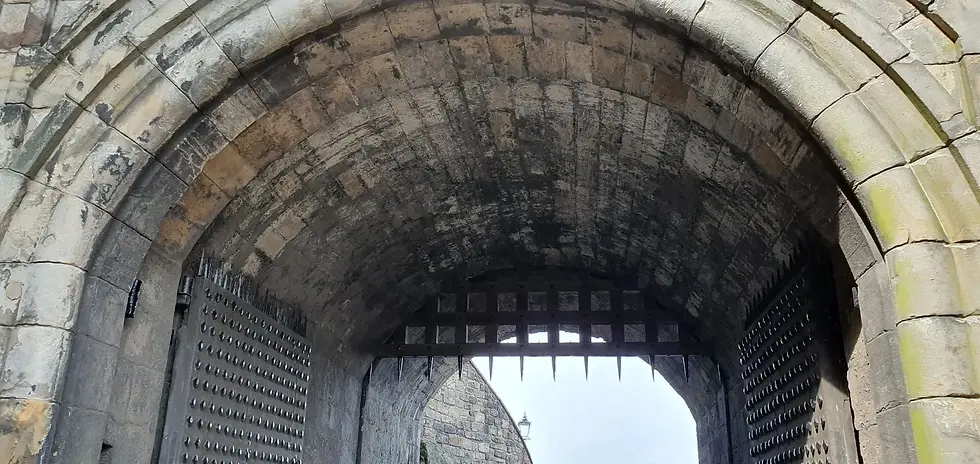
From the moment you approach the entrance, the scale of the place is clear. The large open area (you purchase tickets here) before the entrance gate is packed with visitors, all gathering before passing under the stone archway and iron portcullis that instantly transports you back in time.

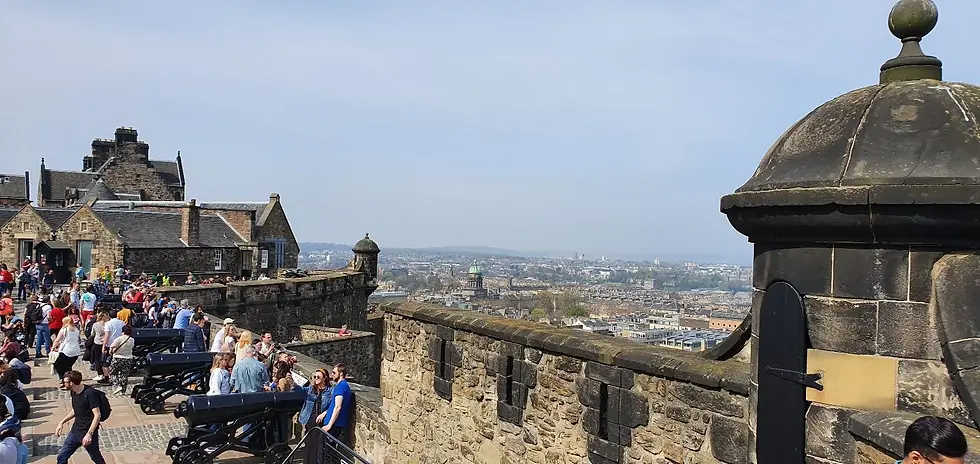
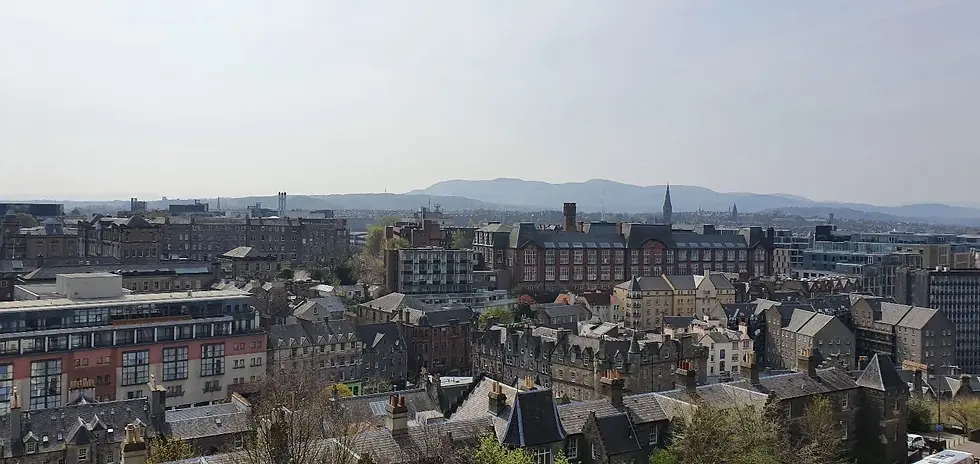
Before even entering, we found ourselves stopping for photos. The views across Edinburgh are incredible, especially on a clear day. The skyline stretches out below you, with the old and new city blending together in a way that feels uniquely Scottish.
Once inside, the experience opens up even more. We especially loved the looming gothic architecture and laid-back feel, despite the large number of visitors.

Perhaps it was our first-date excitement or Jenn's fascination, it being her second castle after we went to Norham Castle before crossing the Scottish border.
Sometimes large crowds can bother us, but here, we were just soaking it all in: our love for history, planting our feet at one of the most besieged castles in history, and all of the additional elements of this fascinating fortress:
The Pet Cemetery
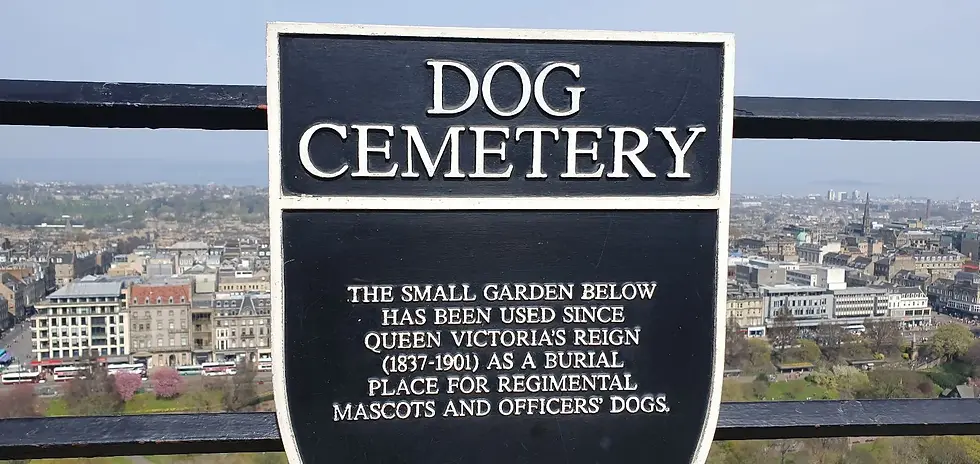
Tucked quietly along the castle walls, the pet cemetery was one of the most unexpected features inside for us. This small garden is located on the Argyle Battery ramparts and looks out over the western edge of the castle grounds.
Put in place during Queen Victoria's reign (1837–1901), it holds the graves of regimental mascots and soldiers’ dogs.

It’s small and easy to miss but is signposted by a plaque. It adds a surprisingly personal layer to the castle’s military history, reminding you that life here wasn’t just about kings and battles.
The Honours of Scotland (Crown Jewels)
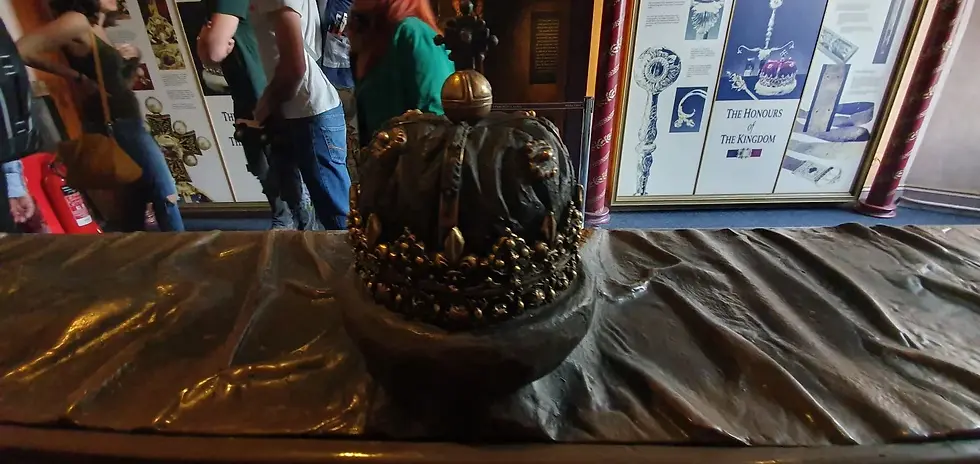
The Scottish Crown Jewels are among the oldest surviving regalia in Britain, used in the coronation of Scottish monarchs. They were hidden for years during political unrest and rediscovered in 1818 by Sir Walter Scott.

Seeing them in person, right at the early days of our castle exploration exploits in Britain, brought a real sense of weight and understanding to Scotland’s royal past.
St. Margaret’s Chapel

This is the oldest surviving building in Edinburgh, dating back to the 12th century. Built by King David I in memory of his mother, Queen Margaret, it remains a place of quiet reflection within the busy castle grounds.
The stained glass windows and small interior contrast sharply with the scale of the fortress outside.
The One O’Clock Gun

Fired daily (except Sundays), this tradition dates back to 1861 and was originally used as a time signal for ships in the Firth of Forth.
We were there for it, and while it only lasts a moment, the build-up and crowd anticipation make it a surprisingly memorable part of the visit. We hadn't planned for this, as we genuinely did not know, but the universe had other ideas, and if you can time your visit for it, it is a nice moment.
The Ramparts & City Views

Walking along the castle walls offers some of the best views in Edinburgh. From here, you can see across the Old Town, New Town, and beyond.
This was one of our favorite parts, although the narrow walkways were pretty packed with visitors, us being there midday.
A First Scottish Beer
Scottish National War Memorial within the Edinburgh Castle grounds Jenn's first Scottish beer on the Royal Mile
Not strictly historical, but still worth mentioning. Jenn’s first Scottish beer, an Innis & Gunn, felt like a moment worth pausing for.
Sometimes it’s these small, personal experiences that anchor a place in one's memory.
The History of Edinburgh Castle
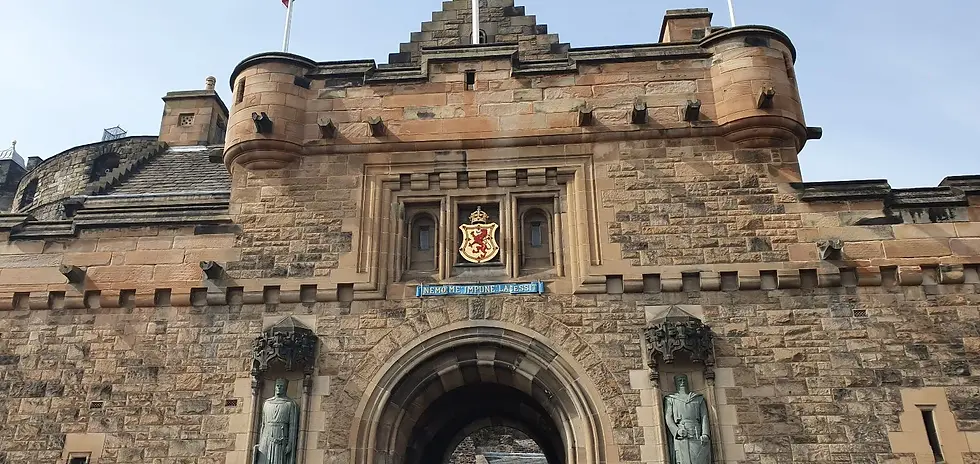
Edinburgh Castle sits on Castle Rock, a volcanic formation created over 300 million years ago.
Its natural defenses made it one of the most strategically important strongholds in Scotland long before the castle itself was built. It is a fortress shaped by conflict, royalty, and centuries of change.
Early Origins

Archaeological evidence suggests human occupation here dates back to the Iron Age. By the early medieval period, the site had become a royal stronghold known as “Din Eidyn,” later evolving into Edinburgh.
How the Castle Was Built
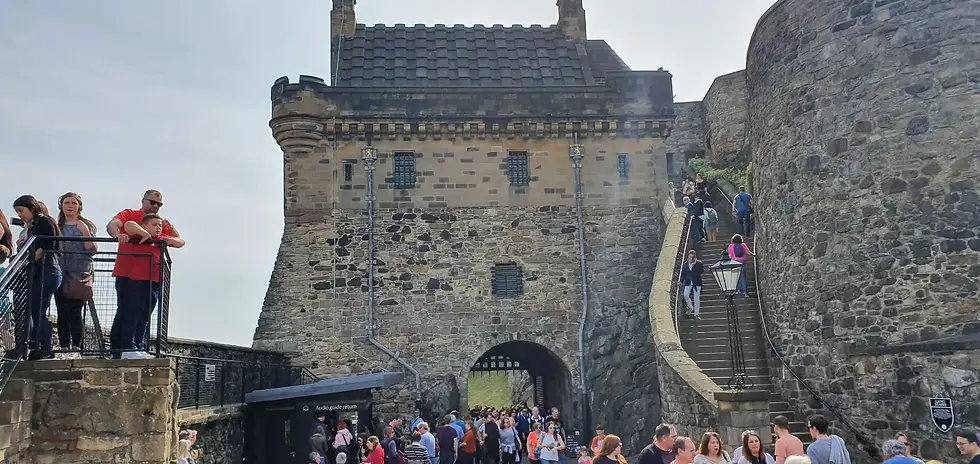
The story of Edinburgh Castle begins with the land itself.
Castle Rock is a hardened volcanic plug, rising sharply above the surrounding landscape. This natural defense meant early settlers didn’t need to build walls straight away; the cliff faces already did most of the work.
When King David I began developing the castle in the 12th century, construction focused on strengthening what nature had already provided. Key building features included:
● Defensive stone walls built directly onto the rock, making them incredibly difficult to breach
● Layered gates and entry points, forcing attackers through narrow, exposed routes
● High vantage positions for spotting enemies long before they approached
● Inner courtyards and strongholds, allowing defenders to retreat and regroup if outer walls fell

Rather than being built all at once, the castle evolved over centuries. Each ruler added new sections depending on the needs of the time, whether for defense, royal living, or military use.
That’s why today, walking through the castle feels like moving through different time periods rather than a single unified structure.
Royal Residence
Robert the Bruce coronation sculpture, 1306 Relief showing Robert the Bruce era figures and inscription.
Under King David I, Edinburgh Castle became a key royal residence and administrative centre. It hosted monarchs, ceremonies, and major political events that shaped Scotland’s future.
One of the most significant moments came in 1566, when Mary, Queen of Scots, gave birth to James VI within the castle walls. That birth would later lead to the union of the Scottish and English crowns, changing the course of British history.
Wars and Sieges
SWIPE FOR MORE →
Edinburgh Castle is one of the most besieged places in Europe, with at least 23 recorded attacks. Its location made it both a prize and a problem; whoever controlled the castle held power over Scotland.
SWIPE FOR MORE →
Here are some of the most notable and dramatic sieges:
The Wars of Scottish Independence (1296–1341)
During the conflict between Scotland and England, the castle changed hands multiple times.
In 1296, King Edward I of England captured the castle and installed English forces.
In 1314, Scottish forces under Thomas Randolph, nephew of Robert the Bruce, launched a daring night attack.
Rather than a full-scale assault, Randolph’s men climbed the steep northern rock face under cover of darkness. It was considered nearly impossible, which is exactly why it worked.
The castle was recaptured for Scotland without a traditional siege, a moment that still stands out as one of the most legendary military maneuvers in its history.
The Lang Siege (1571–1573)
One of the most intense and destructive sieges in the castle’s history came after the forced abdication of Mary, Queen of Scots.
Supporters of Mary held the castle, while forces backing her infant son, James VI, laid siege.
The castle endured over a year of bombardment, and English forces were brought in to assist with heavy artillery. Large sections of the castle were destroyed during the attack.
This siege marked a turning point. After it ended, the castle was rebuilt with stronger artillery defenses, reflecting the changing nature of warfare.
Cromwell’s Siege (1650)
During the English Civil War, Oliver Cromwell’s forces captured Edinburgh, but the castle held out longer than the rest of the city.
The siege lasted several months, and the castle eventually surrendered due to lack of supplies rather than being overrun.
This showed just how effective its defenses still were, even in the age of gunpowder warfare.
Jacobite Rising (1745)
During the Jacobite uprising led by Bonnie Prince Charlie, Edinburgh fell quickly to rebel forces, but the castle itself did not.
Government troops held the castle as Jacobite forces lacked the heavy artillery needed to breach its defenses.
Despite controlling the city, they were unable to take the fortress above it, highlighting once again how difficult it was to capture.
Military Stronghold

From the late 17th century onward, the castle transitioned more into a military base and garrison.
It housed soldiers, prisoners of war, and military supplies, with parts of the structure adapted for defense rather than royal living.
Symbol of Scotland

Today, Edinburgh Castle, a UNESCO World Heritage Site, stands as a symbol of Scottish identity and resilience. It houses the Crown Jewels, war memorials, and historical exhibitions that tell the story of Scotland’s past. If you’re planning a wider trip, explore more of our experiences across Scotland in our Scotland travel blogs, including castles, road trips, and historic sites.
🎟️ Consider Taking a Tour in Edinburgh
Edinburgh Castle is one of the most visited landmarks in Scotland, and it’s easy to see why. A guided tour can help you skip the lines and understand the stories behind the fortress, often combined with a walk through the Old Town for a more complete experience.
Edinburgh Castle Interesting Facts

● There are hidden underground vaults: Parts of the castle extend below ground level, including storage areas and former prisons. Some sections aren’t open to the public.
● The castle has no natural water source: Despite its height, the castle relied on stored rainwater and supplies, which is why sieges could still force surrender.
● Prisoners carved graffiti into the walls: Captured soldiers, including Americans during the War of Independence, left carvings that can still be seen today.
● The castle wasn’t always Scottish: At several points in history, it was occupied and controlled by English forces, sometimes for decades at a time.

● A time ball once dropped nearby: Before modern clocks, a time ball system worked alongside the One O’Clock Gun to help ships set accurate time.
● It shaped the layout of Edinburgh: The Royal Mile developed directly from the castle down toward Holyrood, forming the spine of the Old Town.
● It was once used as a military prison: During the Napoleonic Wars, prisoners of war were held inside the castle.
● It plays a central role in the Edinburgh Military Tattoo: Every year, the castle esplanade becomes a performance arena for one of Scotland’s biggest cultural events.
Tickets & Entry Options
You can buy tickets on-site, but queues can be long, especially on weekends.
It is highly recommended to book in advance online.
Go back in time on a guided walking tour of Edinburgh Castle. Listen to fascinating stories of battles, royals, and rebels, and take time to explore on your own after the tour.
Reserve now, pay later. Cancel up to 24 hours in advance for a full refund with GetYourGuide.
Official Ticket Prices
Ticket type | Online price | Walk-up price |
Adult (16-64 yrs) | £23.50 | £26.00 |
Concession (65 yrs+ and unemployed) | £19.00 | £21.00 |
Child (7-15 yrs) | £14.00 | £15.50 |
Adult Flexi Ticket | £38.00 | n/a |
Concession Flexi Ticket | £30.50 | n/a |
Child Flexi Ticket | £22.50 | n/a |
Family (1 adult, 2 children) | £48.50 | £54.00 |
Family (2 adults, 2 children) | £67.50 | £74.50 |
Family (2 adults, 3 children) | £80.00 | £88.50 |
* Prices shown are in British pounds and subject to change at any time. Always check the official website for the most up-to-date information. Convert your currency here.
Opening Hours & Best Time to Visit

Opening hours
● Summer: (1st April to 30th September) 9:30 am – 6 pm
Last entry: 5pm
● Winter: (October 1st–March 31st) 9:30 am – 5 pm
Last entry: 4pm
● One O'Clock Gun: Fires daily at 1 pm (except Sundays, Good Friday, and Christmas Day).
● Closed: 25th & 26th December.
Seasonal Breakdown
● Spring (March–May): Cooler but quieter, good balance of weather and crowd levels
● Summer (June–August): Warmest months, but busiest, especially during the Edinburgh Festival
● Autumn (September–November): Crisp air, fewer crowds, great for photography
● Winter (December–February): Cold and shorter days, but a more atmospheric experience
Best Time of Day
● Early morning for fewer crowds
● Late afternoon for softer light and better views
● Avoid midday on weekends if possible
How to Get There

Edinburgh Castle sits at the top of the Royal Mile in the Old Town, meaning access is mostly on foot for the final stretch.
By Car (Route + Parking)
If driving into Edinburgh, you’ll likely approach via:
● A720 (Edinburgh City Bypass)
● Then onto A71 / A70 / A8 depending on direction
● Follow signs toward City Centre / Old Town / Castle
Key roads near the castle:
● Lothian Road (A702)
● King’s Stables Road
● Johnston Terrace (leads toward castle access)
Recommended parking:
● Castle Terrace Car Park (EH1 2EW): Closest major car park
● NCP Castle Terrace: Reliable for longer stays, especially if you plan to explore more of the city after the castle (10-minute walk)
● Grassmarket area (West Port / King’s Stables Road): Some on-street options
💡 Expect a steep uphill walk from most parking locations.
Car Rental Option
Getting to Edinburgh Castle is straightforward thanks to Edinburgh’s walkable centre and extensive public transport network. Most visitors do not need a car while exploring the city itself.
Car rental becomes far more useful if you plan to continue beyond Edinburgh and explore more of Scotland at your own pace. Use the search tool below to find the best car rental deals in Edinburgh.
By Bus
● The Airlink 100 bus goes from the airport to the center of the city. Waverley Bridge, which is next to the main train station, is a 25-minute walk away. Visit lothianbuses.com for more information.
● You could also look for local buses that go to the Mound or George IV Bridge.
By Train
● Nearest station: Edinburgh Waverley
● Around a 10–15 minute walk uphill via Market Street or the Royal Mile
By Bicycle
You can find bike racks behind the ticket box on the left side of the esplanade from November to April. They aren't available from May to October, when the Tattoo stands are up.
From Edinburgh Airport
● Tram to Princes Street or St Andrew Square
● Then walk or take a short taxi ride
Edinburgh Castle Contact Information
General Enquiries:
+44 (0) 131 225 9846
Disabled Access & Parking:
+44 (0) 131 310 5114
Where to Stay Nearby
Choosing the right area changes your Edinburgh experience. We were on a road trip, so we did not get to stay in the city, but below are a few options based on our research and recommendations from others.
Old Town
(Best for First-Time Visitors)
● Walking distance to the castle
● Historic streets and atmosphere
● Can be a bit busier and noisier
New Town
(Best for Balance)
● More space and quieter streets
● Still walkable to major attractions
● Best for restaurants and shopping
Grassmarket Area
(Best for Castle Access)
● Great mix of pubs and views
● Close to castle access routes
● Good base if you like lively evenings
Explore accommodation options on our interactive map below.
💡 Staying within walking distance saves time and avoids steep climbs late in the day.
Tips for Visiting

Here are a few small things that make a big difference to your experience:
● Book tickets in advance; queues build quickly
● Wear proper footwear; the terrain is uneven and steep
● Take your time; there’s more here than just the main viewpoints
● If you can handle the crowds, try to time your visit for the cannon firing (1pm)
● Pause at viewpoints before entering; the views are part of the experience
● Don’t rush past the smaller areas like the pet cemetery or St. Margaret's Chapel
For a different side of the city, visiting the Royal Botanic Garden offers a quieter and more relaxed experience.
Our Experience Rating:
Edinburgh Castle

This is one of those places that sticks with you more than you expect. For us, it’s not just about one thing. It’s how everything comes together.
The setting above the city, the mix of quiet corners and busy viewpoints, and the feeling of moving through different layers of Scotland (and England's) past.
The incredible history, its role in uniting the crowns of two arch-enemies, and even the pet cemetery. It is an almost romantic experience. Which, 10 days into our month-long first date, was pretty much perfect timing!
Of the many castles and historic places we have visited since, Edinburgh's prized protector sits very firmly in the not-to-be missed category.
Edinburgh is one of the most historic and visually striking cities in the UK. For more destinations and travel inspiration, explore our Scotland travel guides.
FAQ: Edinburgh Castle
Clear answers to help you plan your visit, based on our experience and what we have been asked about it.
Is Edinburgh Castle worth it?
Yes, it’s one of Scotland’s most significant landmarks and offers both historical depth and incredible views. Even if you’ve seen other castles, the setting alone makes it stand out.
How long do I need?
Most visitors spend 2 to 3 hours exploring the grounds and exhibitions. If you take your time, you could easily spend longer.
Can I buy tickets at the castle?
Yes, tickets are available at the entrance, but queues can be long during peak times. Booking ahead helps you avoid waiting.
Is Edinburgh Castle child-friendly?
Yes, there’s plenty to see, including interactive exhibits and open spaces. However, the terrain can be uneven, so supervision is important.
Is Edinburgh Castle accessible?
Some areas are accessible, but steep paths and historic structures can make full access difficult. It’s best to check accessibility details in advance.
What is the One O’Clock Gun?
It’s a daily cannon-firing tradition used historically to signal time to ships. Today, it’s more of a visitor attraction but still draws a crowd.
Is food available inside?
Yes, there are cafés and places to buy drinks within the grounds. It’s a good spot to take a break during your visit.
Is photography allowed?
Photography is allowed in most outdoor areas. Some indoor exhibits may have restrictions.
When is the castle busiest?
Weekends and summer months tend to be the busiest. Midweek mornings are usually quieter.
Can I visit just the outside?
Yes, you can walk up to the entrance and enjoy the views without buying a ticket. However, most of the key attractions are inside.
Related Reads
Royal Botanic Garden Edinburgh A peaceful escape in the city, with diverse plant collections and scenic walking paths.
Balmoral Castle – A Royal Home
Discover the Scottish residence of the Royal Family, set within the Cairngorms landscape.
A quiet border castle with dramatic ruins and views across the River Tweed.
All you need to know, including tips, customs, top destinations, and more.


Such an awesome castle, sitting atop its rock, overlooking the city. It is everything one would imagine a castle to be! Inside and out, this legendary fortress and royal home is a non-negotiable for castle lovers!