

Royal Botanic Garden: Our First Stop on the road to Edinburgh

Updated: Aug 28
Just outside Edinburgh, the Royal Botanic Garden felt like the perfect place to pause before stepping into the city.
Quiet, open, and beautifully laid out, it gave us exactly what we wanted in the moment: a beautiful, peaceful, and romantic start to our time in Scotland.

Still early days of meeting in person, day eight of a month-long first date, and coming off the history and atmosphere of Norham Castle, this felt like the natural follow-up.
Less about ticking off sights, more about just being somewhere together and letting the moment settle.
The journey to get here added something unexpected. This was our first venture into the country, and we were also doing so by car.
For a deeper dive into the city’s history, visiting Edinburgh Castle is a must.

Key Takeaways
● Best time to visit: Our late-April visit was peaceful and colorful, but slightly early for peak bloom. Late spring or early summer should offer the strongest floral displays.
● Getting there: The garden is just over a mile north of central Edinburgh, around 20 to 30 minutes on foot or 10 to 15 minutes by bus. Drivers should expect on-street parking rather than a dedicated lot.
● Useful detail: Entry to the main gardens is free; allow at least 1 to 2 hours, and check the Palm Houses restoration status before visiting.
In This Post...
See More...
Highlights from Our Visit
Crossing into Scotland didn’t feel like a crossing at all. No barriers, no checkpoints, not even a pause in the road. Just a quiet stretch, a river, and a stone marker that is easy to miss if you are not looking for it.
One cannot miss the more obvious sign just behind it, though. Blue, bold, and unmistakable... the St. Andrew's Cross accompanied with a warm welcome to Scotland.

Jenn half-expected at least something resembling a border (she even insisted on having her passport on hand, just in case).
Even Leon, who perhaps knew better about the borderless U.K., still felt that slight pause of "Is that it?” But, just like that, we were in.
What followed was immediate; the landscape felt sharper, the greens deeper, and the countryside somehow more defined than on the road up from England's midlands. There is markedly less litter on the sides of the roads, too.
It was almost impossible not to notice the meticulously pruned and trimmed hedges lining the A1 and the A720 Edinburgh City Bypass.
This sense of protected nature set the tone perfectly for our first stop, and looking back, we could not have picked a better place to begin.
Arriving just outside the city centre, the gardens immediately felt like a calm pause after the emotion of Norham and the quiet excitement of crossing into a new country.
Especially after our 'not-so-long' journey to get here!

The first thing we noticed was the space. Wide, open lawns, carefully designed pathways, and that feeling of being able to just wander without needing a plan.
No pressure to tick anything off. Just walk. And take the odd photo (or three). 9 days into our first date, we had no idea one day we would be documenting this moment on our own blog!

Even though we visited toward the end of April, slightly early for peak bloom, there was still plenty to take in.
The bursts of color from the rhododendrons stood out straight away, especially those deep purples and reds that almost didn’t look real. You could tell that just a few weeks later, the place would be completely transformed.
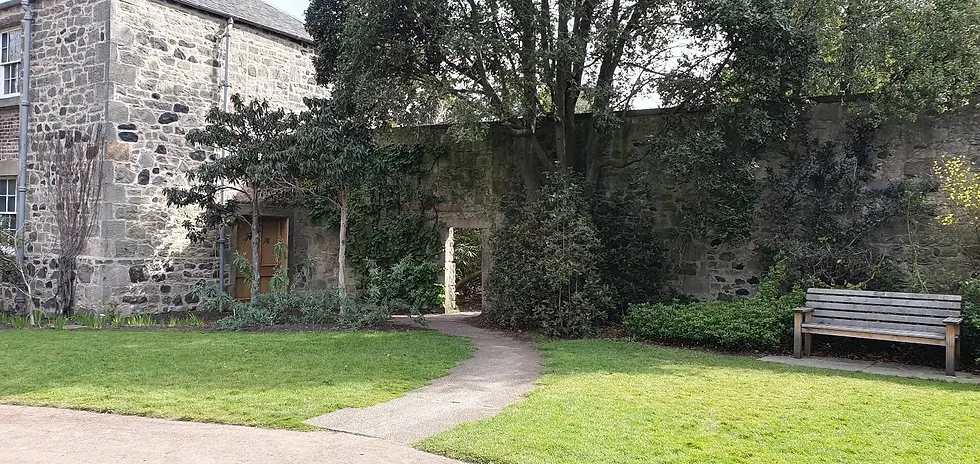
The stone archways and garden walls added a quiet sense of history without trying too hard. Even the sculpture in the pond gave the space a slightly artistic edge, without taking away from the natural feel.

We had one of those simple travel moments that stick with you more than the big-ticket attractions. Coffee in hand, free from crowds, and just being present. No rush, no agenda. Just enjoying where we were, together.
Looking back, it wasn’t just about what we saw; it was about how it felt. And that is exactly why this place worked so well as our first stop in Scotland.
The Palm Houses

A major change is happening to one of the most famous parts of the Royal Botanic Garden Edinburgh.
The historic Palm Houses, which date back to the 1800s, are closed for a long restoration project called "Revealing the Palm Houses."
Originally, these Victorian glasshouses were built to keep tropical plants in carefully controlled conditions. They are just as impressive structurally as the collections they protect.
Over time, the original iron framework and glass started to break down, and the building's internal systems no longer met modern conservation standards.
The gardens chose to do a full restoration instead of just patching things up. They kept the character of the gardens while upgrading everything behind the scenes.
This means strengthening the building, putting in new windows, and putting in new climate control systems to better protect rare and fragile plants.
It's just as important to protect the area for the long term as it is to make the visitor experience better.
The first plants are starting to come back as the project moves into its last phase. This is a slow process that is carefully planned to make sure that each species can safely adapt back to its environment.
The Palm Houses are set to reopen in the fall of 2026, and when they do, they will probably be one of the best things about the gardens.
💡 If you want to get the most out of your trip to the gardens, we advise waiting until after the Palm Houses reopen, although the gardens are still worth your time, even without it.
The Aeolian Harp Pavilion

The Aeolian Harp Pavilion is one of those things you don't look for but end up remembering.
It stands out right away when you look at it. A wooden structure that is curved and feels both modern and a little natural. It fits in with the plants around it but still catches your eye. You can't help but stop there, even if you didn't plan to.
The pavilion is based on the idea of an Aeolian harp, which is an instrument that the wind plays instead of hands. You won't always hear sound from it, but the idea adds to the experience.
It felt like one of those things we didn't expect to find when we found it. A great place to take pictures, but also a place to stand for a moment and take it all in.
The craftsmanship, the trees around it, and the calmness of the area. It all fits together without too much effort.
History of the Royal Botanic Garden Edinburgh

The Royal Botanic Garden Edinburgh is more than just a park; it is one of the most important botanical institutions in the world.
The physic garden was first built in 1670 near Holyrood Palace to grow plants that could be used for medicine. Back then, it was more about science than fun. Doctors used the space to study plant-based treatments.
The garden changed locations many times over the years, but it finally settled in Inverleith in the early 1800s, where it still is today. Its purpose grew as it grew.
What started out as a small medicinal garden grew into a place for plant research, conservation, and education from all over the world.
Today, it is an important part of international botanical work, such as studying plant preservation and biodiversity.
There are thousands of species from all over the world living here, and many of them are rare or on the verge of extinction.
You might not feel the scientific weight right away if you walked through it now. But it's there, hidden under the paths, the collections, and the design.
It is a place that quietly balances beauty with usefulness.

Interesting Facts

● The garden spans over 70 acres and holds more than 13,000 plant species
● It is one of the leading botanical research centers in Europe
● The Rock Garden is among the largest in the world and features plants from mountainous regions globally
● The Palm House, built in the 1800s, is one of the tallest traditional palm houses ever constructed in the UK
● The garden is part of a network that includes three regional gardens across Scotland
● Scientists here contribute to global conservation efforts and climate research
● Entry to the main gardens is free, making it one of the best-value attractions in Edinburgh
💡 If you visit during peak bloom, especially late spring, expect a completely different visual experience compared to early-season visits.
Opening Times (Seasonal)

Opening times vary throughout the year, so it is worth planning ahead:
● November to January: 10 am to 3:30 pm
● February and October: 10 am to 4 pm
● March and September: 10 am to 5 pm
● April to August: 10 am to 6 pm
Glasshouses usually open at 10 am but may close earlier than the gardens and often require a small entry fee.
💡 Always check ahead if glasshouses are important to your visit, as hours can change.
How to Get There
The Royal Botanic Garden Edinburgh is located just over a mile north of the city center, making it one of the easiest natural escapes to reach without leaving the city behind.
By Air
If you are arriving in Edinburgh by air, you will likely land at Edinburgh Airport.
From there, you can take the tram or a bus into the city centre, followed by a short bus ride or walk to the gardens.
Parking Information
Parking at the Royal Botanic Garden Edinburgh is entirely on-street, as there is no dedicated visitor car park.
The main area to aim for is near the West Gate (Arboretum Place, EH3 5NZ), where you will find metered bays. You can also find parking around Inverleith Row (East Gate) and nearby streets such as Arboretum Road, Inverleith Place, and Fettes Avenue.
Charges typically apply Monday to Friday, 8:30 am to 5:30 pm, with rates starting at around £2 per hour, depending on the exact location. Stay durations vary, with some bays allowing longer parking.
Parking is usually free in most surrounding streets on Sundays.
Blue Badge holders can park for free in metered bays and designated spaces near the West Gate.
If you prefer to avoid the hassle, using a Park & Ride or public transport is often the easier option, especially during peak times.
💡 Parking signage can be inconsistent, even on opposite sides of the same street, so always double-check before leaving your car.
By Public Transport
Public transport is straightforward. Several bus routes run from central Edinburgh to Inverleith Row, with stops just a few minutes’ walk from the entrance.
The journey usually takes around 10 to 15 minutes.
By Walking
Walking is also a great option if the weather is on your side. From the city centre, it takes around 25 minutes and gives you a nice transition from urban Edinburgh into a quieter, greener space.
By Car
Driving to the Royal Botanic Garden Edinburgh is straightforward, especially if you are arriving as part of a wider UK road trip like we were.
Coming from the south (as we did from Norham Castle), you will likely follow the A1 northbound into Scotland. Stay on the A1 as you approach Edinburgh, then join the A720 Edinburgh City Bypass.
From here:
● Exit onto the A902 (Leith/Granton direction)
● Follow signs toward Leith/Ferry Road
● Continue onto Ferry Road (A902)
● Turn onto Inverleith Row (A901)
From Inverleith Row, you are right alongside the gardens. For easier access and parking, continue slightly further and turn toward Arboretum Place, which brings you directly to the West Gate.
If you are already in central Edinburgh:
● Head north via Queen Street
● Continue onto Dundas Street (A90)
● Follow it onto Inverleith Row (A901)
The gardens will appear on your right, with nearby parking options around Arboretum Place and surrounding streets.
Car Rental
Getting around Edinburgh is relatively easy thanks to the city’s buses, trams, and walkable centre. However, renting a car becomes much more useful if you plan to continue exploring other parts of Scotland beyond the capital.
Many travellers choose to pick up a car before heading deeper into the Highlands or beginning a wider Scotland road trip.
If renting suits your plans, compare options below to help you find the best price and availability.
For travel across Scotland or the UK, you can check routes, trains, and buses here:

Tips for Visiting

● Visit late spring or early summer for the best blooms
● Go early in the day for quieter paths and easier parking
● Allow at least 1 to 2 hours to explore properly
● Bring a drink or grab a coffee on-site and slow the pace down
● Check seasonal highlights before visiting so you know what is in bloom
💡 This is not a checklist destination. The best way to enjoy it is to wander without a plan!
Where to Stay in Edinburgh
Staying close to the center makes it easy to explore on foot, especially if you are visiting places like Edinburgh Castle, the Royal Mile, and Princes Street.
Use our hotel map below to find the best options based on your budget and travel style.
Our Experience Rating:
Royal Botanic Garden

This is one of those ratings where the situation matters. This could have easily been a 5 if we had gone a few weeks later, when everything was in full bloom.
That being said, we could already see how the landscape, the structure, and the way the garden is meant to change with the seasons could turn out.
For us, regardless of timing, the Royal Botanic Garden Edinburgh is a peaceful, beautiful, and really fun first stop in Scotland.
It gave us time to process everything, to relax after the drive up from the Midlands, and to just be there with each other.
There aren't a lot of famous landmarks to see there. And not really a whole lot to do. But as we see it, perhaps that's the whole point.
Places like this highlight the natural beauty that complements Scotland’s historic cities. For more destinations and travel ideas, explore our Scotland travel guides.
🎟️ Consider Taking a Tour in Edinburgh
If you’re planning to explore more of Edinburgh beyond its green spaces, a guided walking tour is a great way to see the city’s highlights while learning about its history and hidden corners.
FAQ: Royal Botanic Garden Edinburgh
Before you visit, here are some useful things to know.
Is entry free?
Yes, entry to the main gardens is free. Glasshouses may require a ticket.
How long do I need?
Around 1 to 2 hours is ideal for a relaxed visit.
Is the garden worth visiting in spring?
Yes, but expect fewer blooms. The structures and space still make it worthwhile.
Can I walk from the center?
Yes, it takes around 20 to 30 minutes.
Are there cafes inside?
Yes, there are places to grab drinks and light food.
When should I visit?
Late spring and early summer offer the best floral displays.
Is the garden family-friendly?
Yes, it is great for families with plenty of open space.
Are dogs allowed?
Dogs are not permitted in the main garden areas. Only highly trained assistance animals, such as guide dogs, are permitted within the grounds.
Should I book ahead?
Not for the gardens, but some indoor areas may require tickets.
Can I visit year-round?
Yes, the gardens are open throughout the year with seasonal changes.
on-site
Related Reads
Continue exploring the UK and beyond:
Discover more top destinations in our Europe travel hub
Read the story of where this journey began at Norham Castle


Comments