

Exploring Little India Singapore: Color, Culture and the Sri Veeramakaliamman Temple

Updated: Aug 28
Singapore may be known for its futuristic skyline, luxury hotels, and world-class attractions, but some of its most memorable experiences come from exploring its historic neighborhoods.
One of the most vibrant of these is Little India, a district filled with colorful buildings, flower markets, Hindu temples, and the unmistakable aromas of spices and incense.

During our time in Singapore, we were staying in Chinatown, exploring many of the city’s top free things to do, including the Gardens by the Bay light show, the Marina Bay waterfront, Spectra at Marina Bay Sands, and even the spectacular Jewel at Changi Airport.
But one place we were particularly excited to visit was Little India.
Not only had we heard about its energy and cultural depth, but we were also about to travel to Delhi, making this visit feel like a fascinating preview of the real India.

Key Takeaways
● Why visit: Little India offers one of Singapore’s most colorful cultural experiences, combining Hindu temples, heritage buildings, flower markets, and South Asian food.
● What to see: Visit Sri Veeramakaliamman Temple, walk Serangoon Road, photograph the Tan Teng Niah House, and explore Tekka Center.
● Before you go: Entry to the temple is free, modest clothing is expected, and Little India MRT provides the easiest access from central Singapore.
In This Post...
See More...
Highlights of Our Visit

When we came to Little India, we were really excited. We had heard a lot about how crowded and vibrant the neighborhood was, and we were excited to see it for ourselves.
It was easier than we thought to get there from Chinatown. We got on the MRT just a few minutes after leaving our hotel, and soon we were in a very different part of Singapore.
The first item we saw was the Little India historical sign, which told us about some of the area's historic sites. You could see immediately that this wasn't just another neighborhood. There was a lot of culture in the location.
As soon as we strolled along the main road, we could tell that the vibe was very different from the sleek districts around Marina Bay.
There were garlands hanging across the street that made the sky look colorful and made the place feel like a party.

On the walkways, there were stores that sold jewelry, clothes, beauty products, and traditional items. The streets felt more alive and narrower than the vast boulevards we were used to in other sections of Singapore.
One of the nicest moments of the trip was when we went to the flower booths. We could smell them before we saw them.
When we got there, stall owners were going about their morning setup, preparing the bright displays (it was still early in the day) for tourists and locals.
The colors and smells made the place feel like it was truly alive, and it was fun to witness the process.

It was notable that no one tried to sell us anything, and we were able to browse freely without interruption. Quite refreshing as a tourist!
We were most excited to see the Sri Veeramakaliamman Temple, and when we eventually got there, we were amazed by how lovely the outside looked.
There are many colorful statues of Hindu gods, goddesses, and myths at the entrance. The detail was incredible, and it reminded us of the temples we had visited earlier at Batu Caves in Kuala Lumpur (Malaysia), which had the same vivid colors and superb craftsmanship.
People take off their shoes before they go into the temple. The vibe transforms quickly from the hectic street outside to something much more peaceful and spiritual.
People who were praying quietly proceeded from shrine to shrine, lighted incense, and prayed to the gods. We did film (respectfully) and spent time soaking up the sights and sounds as the rituals happened around us.

After we left the temple, we walked along the street for a little while longer. We noticed beautiful buildings and murals on the way. The humidity was really starting to get to us by this point, even though the sky was gloomy.
We ultimately made the decision to go back to the MRT. Next, we went to Marina Bay Sands. Before the rain came, we wanted to get to the SkyPark observation deck.
Little India isn't very huge, but it lets you see one of the various cultures that make Singapore such a distinct and intriguing place to live.

Watch Our Visit to Little India
In this vlog, we explore Singapore’s neighborhoods and attractions while asking a simple question: is Singapore worth the price?
The video includes:
● A stop at the viral Cafe Monochrome in Chinatown
● Navigating Singapore’s MRT system
● Walking through Little India’s markets and temples
● Visiting Sri Veeramakaliamman Temple
● Heading to Marina Bay Sands SkyPark
If you prefer to see Little India in motion, this video gives a great glimpse of the atmosphere.
The History and Cultural Significance of Little India

Little India is one of Singapore’s most historic cultural districts. Its origins date back to the early 19th century, when Singapore was developing as a British trading port.
During this time, large numbers of Indian laborers, traders, and merchants arrived to work in construction, agriculture, and commerce.
Many of these early settlers were Tamil immigrants from South India, which explains why Tamil culture remains so visible throughout the neighborhood today.
The area was originally known as Serangoon, and it became associated with Indian communities partly because of its cattle trading industry. Indian workers were often involved in livestock farming and related trades.
Over time, the district evolved into a vibrant cultural enclave with:
● Hindu temples
● Indian grocery stores and markets
● Jewelry shops
● Textile and sari stores
● Restaurants serving South Indian cuisine
Today, Little India remains one of the most culturally rich districts in Singapore and is recognized as an important heritage area preserving Indian traditions.
Walking through its streets offers a fascinating glimpse into Singapore’s multicultural identity, where Chinese, Malay, Indian, and Western influences coexist.
What to See and Do in Little India (Top 5 Spots)
⪢ Sri Veeramakaliamman Temple
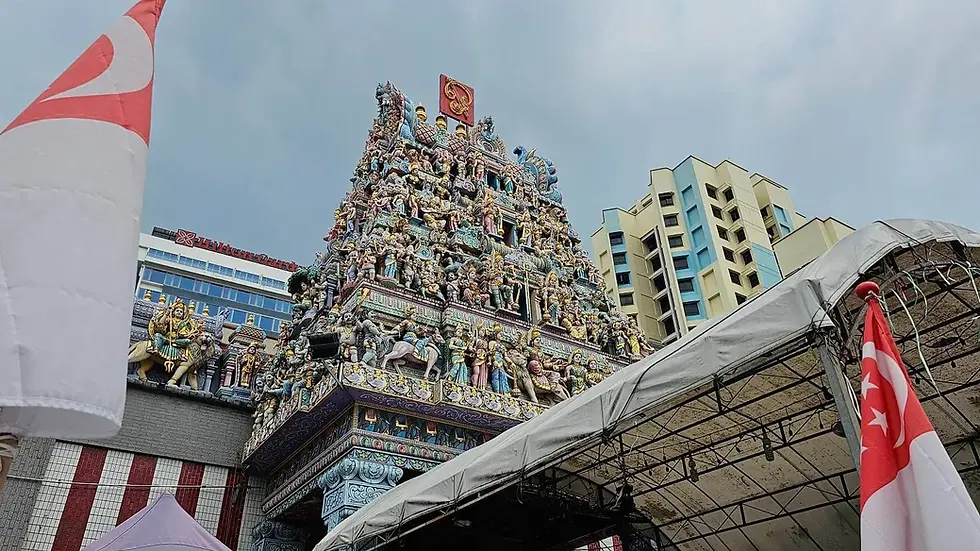
The highlight of our visit was the Sri Veeramakaliamman Temple, one of Singapore’s oldest and most important Hindu temples.
Built in 1881, the temple is dedicated to Goddess Kali, a powerful Hindu deity associated with protection and the destruction of evil.
The first thing you notice is the incredible gopuram, the ornate tower above the entrance.
It is covered in hundreds of colorful statues depicting Hindu gods, goddesses, and mythological figures. The level of detail is incredible.

Inside the temple, visitors remove their shoes before entering as a sign of respect.
Worshippers can pay respects at several inner shrines and altars, each dedicated to different deities, such as Kali, Shiva, Murugan, and Ganesha.
Devotees often bring offerings like flowers, incense, and fruit, while priests conduct daily rituals and prayers.
Intricately carved temple door panels with brass bells and Hindu deity reliefs in Little India. Golden Nataraja statue depicting Shiva’s cosmic dance inside a Hindu temple in Little India.
Photography inside the temple is generally limited, and visitors should remain respectful of those who are there for worship.
For us, stepping inside felt like entering another world. Despite the busy streets outside, the temple had a calm and spiritual atmosphere.
⪢ Other Must-See Places

Serangoon Road
Serangoon Road is the main artery running through Little India. It is a lively stretch filled with jewelry stores, textile shops, Indian clothing boutiques, sari stores, beauty salons, and spice outlets.

Flower Markets & Garland Stalls
The scent of jasmine and marigolds fills the air as vendors carefully assemble flower garlands by hand. These are used in Hindu temple offerings, religious ceremonies, and cultural celebrations.

Tan Teng Niah House
One of the most photographed buildings in Little India, this vibrant Chinese villa dates back to 1900 and is painted in a dazzling mix of pastel colors.
It once belonged to a wealthy businessman who owned sweet factories in the area. It remains one of the most striking examples of historic architecture in the district.

Tekka Center
Tekka Centre is a bustling market and hawker center that offers everything from fresh produce to authentic Indian street food and snacks.
You will find spice stalls, sari vendors, Indian sweets, and traditional South Indian meals. If you want to experience everyday life in Little India, this is the place to do it.

Why and When to Visit Little India
Little India offers a completely different atmosphere compared to the rest of Singapore.
While areas like Marina Bay feel modern and futuristic, Little India feels traditional, colorful, and deeply cultural.
It is worth visiting if you want to:
● Experience Singapore’s multicultural heritage
● See historic temples and architecture
● Try authentic Indian food
● Photograph colorful buildings and street scenes
The best time to visit is morning or early evening, when temperatures are slightly cooler.
During major Hindu festivals such as Deepavali, the district becomes even more vibrant with lights, decorations, and celebrations.
🎟️ Consider Taking a Tour in Singapore
One of the best ways to explore cultural districts like Little India is by tour. Many experiences combine vibrant neighborhoods, temples, and local markets, giving you a deeper understanding of Singapore beyond its modern skyline.
How to Get to Little India
Little India sits just northeast of Singapore’s city center and is one of the easiest cultural districts in the city to reach.
Thanks to Singapore’s incredibly efficient MRT system, getting there is simple whether you are staying in Chinatown, Marina Bay, or Orchard Road.
During our visit, we were staying in Chinatown, and the journey took less than fifteen minutes door-to-door.
A short walk to the MRT, a quick train ride, and we were stepping out into a completely different atmosphere filled with vibrant colors, temples, and flower markets.
From the Airport
Most international visitors arrive at Singapore Changi Airport, one of the best airports in the world. From Changi Airport, you can reach the city center using:
● MRT train from Changi Airport Station
● Airport taxis or ride-hailing apps such as Grab
● Private airport transfers
Travel time to central Singapore is typically 20–30 minutes, depending on traffic.
💡 Tip: If you plan to explore several areas of the city, Singapore’s MRT system is by far the easiest and most affordable way to get around.
By MRT
The MRT is the easiest way to reach Little India. The district is served by Little India MRT Station, which connects to:
● Downtown Line (Blue)
● North East Line (Purple)
From many central neighborhoods, the journey takes 10–15 minutes.
💡 Tip: Purchase an EZ-Link card or use contactless payment to move quickly between MRT stations and buses.
By Taxi or Ride-Hailing
Taxis and ride-hailing apps such as Grab are widely available in Singapore.
A ride from areas like Marina Bay or Orchard Road typically takes 10–15 minutes, depending on traffic.
This can be a convenient option if you are visiting during the hottest part of the day or traveling with luggage.
By Car Rental
Most travelers do not rent cars in Singapore due to excellent public transportation and high parking costs.
However, if you prefer to drive, you can compare rental options through platforms such as Rentalcars, which allow you to check prices across multiple providers.
Driving in Singapore is straightforward, but parking around Little India can be limited.
Tips for Visiting Little India
Traditional flower and offering stall filled with marigolds and jasmine garlands. Brightly colored flower garlands hanging from a market stall along the streets.
A few things we learned during our visit:
● Arrive early in the day if possible. Singapore’s humidity can be intense, and walking around in midday heat can become tiring quickly.
● Dress respectfully if you plan to enter temples. Shoulders and knees should generally be covered.
● Remove your shoes before entering any Hindu temple.
● Bring/carry water. Even on overcast days, the heat can feel intense.
● Take time to observe the local culture respectfully. Many people visit temples for genuine religious reasons.
Where to Stay Nearby
We stayed at the Rest Hotel 1888 Collection in Chinatown, which turned out to be a great base for exploring Singapore.
For travelers visiting Little India, some convenient accommodation options include:
● Rest Hotel 1888 Collection: A good value option, 15-20 minutes away
● One Farrer Hotel: A luxury hotel near Little India
● Holiday Inn Little India: Comfortable and centrally located
You can also explore nearby hotels using our recommended booking tools.
Our Experience Rating:
Little India, Singapore

Overall, we really enjoyed visiting Little India.
It may not have the polished feel of Singapore’s luxury districts, but that is exactly what makes it interesting. The area feels authentic, energetic, and culturally rich.
The highlight was undoubtedly the Sri Veeramakaliamman Temple, which is one of the most visually impressive temples we have seen in Southeast Asia.
The flower stalls, colorful streets, and unique atmosphere made the visit worthwhile. It is not a huge area and can feel crowded at times, but it offers a fascinating cultural contrast to the rest of Singapore.
FAQ: Little India, Singapore
Little India is one of the most culturally unique districts in Singapore, and many travelers visit to experience its temples, markets, and vibrant streets. Here are some common questions visitors often ask.
Is Little India worth it?
Yes. Little India offers a colorful and cultural experience very different from Singapore’s modern skyline. The temples, markets, and heritage buildings make it a fascinating place to explore.
How long in Little India?
Most visitors spend between one and two hours exploring the district, depending on whether they visit the temple, markets, or restaurants.
Is temple entry free?
Yes, entry to the temple is free. Donations are welcome but not required.
What to wear at the temple?
Visitors should dress modestly, covering shoulders and knees where possible. Shoes must be removed before entering.
Is Little India safe?
Singapore is one of the safest cities in the world, and Little India is generally very safe to visit.
What food should I try?
Popular choices include dosa, biryani, curry dishes, and traditional Indian sweets.
When should I visit Little India?
Morning or early evening is ideal to avoid the midday heat.
Which MRT for Little India?
Little India MRT Station connects to both the Downtown Line and the Northeast Line.
Are there markets in Little India?
Yes, Tekka Centre is one of the most popular markets in the area.
Is Little India busy?
It can become crowded, especially on weekends and during festivals.
Related Reads
You might also enjoy these Singapore travel guides:
Gardens by the Bay, Singapore: Supertrees, domes, and iconic experiences
Spectra Light & Water Show, Marina Bay Sands: Singapore’s free nighttime spectacle
Marina Bay Sands SkyPark: Incredible views of Singapore from above
2D Monochrome Café: Singapore’s Optical Illusion Coffee Spot


Comments