

Exploring Intramuros: Dark Tourism or an Essential Manila Experience?
- Jenn & Leon

- Apr 21, 2024
- 11 min read
Updated: Jan 1
Explore the haunting history and resilience of Intramuros in Manila.
With almost 500 years of history, this walled city is a testament to the survival and independence of the Philippines.

From Spanish colonial rule to Japanese occupation, along with near-total destruction in WW2, this city has not just survived; in the face of shocking adversity and the worst of humanity, it has thrived.
We took the somber journey to Intramuros, having already known about its awful history, littered with death and destruction.
While almost all of its colonial-era structures have been lost to war, a few do survive, offering a fascinating insight into what once was.
Intramuros has been rebuilt since the war and has maintained many of the original street names, along with plaques of what once stood in place.
It is now a thriving hub of activity, from trade to tourism, and is a symbol of the Philippine spirit and hope.
If you really want to learn about the Philippines, this is the place to be, even if some do consider it 'dark tourism.'
But more on that as you read on, along with more on the history of Intramuros and its troubled past, the must-see places, important visitor information, and, as ever, our experience rating.
In This Post...
What Is Intramuros?
Intramuros; the name itself evokes a sense of intrigue, right?
Translating to "within walls" in Spanish, Intramuros is much more than just a district in Manila, Philippines.
It's a meticulously planned and fortified historic city, standing as a testament to a bygone era.
Founded in 1571 by Spanish conquistador Miguel López de Legazpi, Intramuros thrived as the political and religious centre of the Spanish colonial Philippines for centuries.

⪢ A Citadel of Spanish Colonial Power
Imagine a walled city teeming with activity. Spanish galleons docked at the nearby harbor, while grand residences and imposing churches dominated the landscape.
Intramuros served as the seat of the Captaincy General of the Philippines, housing the governor-general and the Real Audiencia (the high court).
Fort Santiago, a formidable defensive structure, stands as a reminder of Spanish military might.
Religious institutions like San Agustin Church, the oldest stone church in the Philippines, and Manila Cathedral, a masterpiece of Baroque architecture, showcase the profound influence of the Catholic Church during this period.
⪢ Beyond the Grand Structures: A Window into the Past
Intramuros offers a captivating glimpse into the social fabric of Spanish Manila. Museums like Casa Manila, a restored colonial mansion, provide a fascinating look into the lifestyles and furnishings of the Spanish elite.
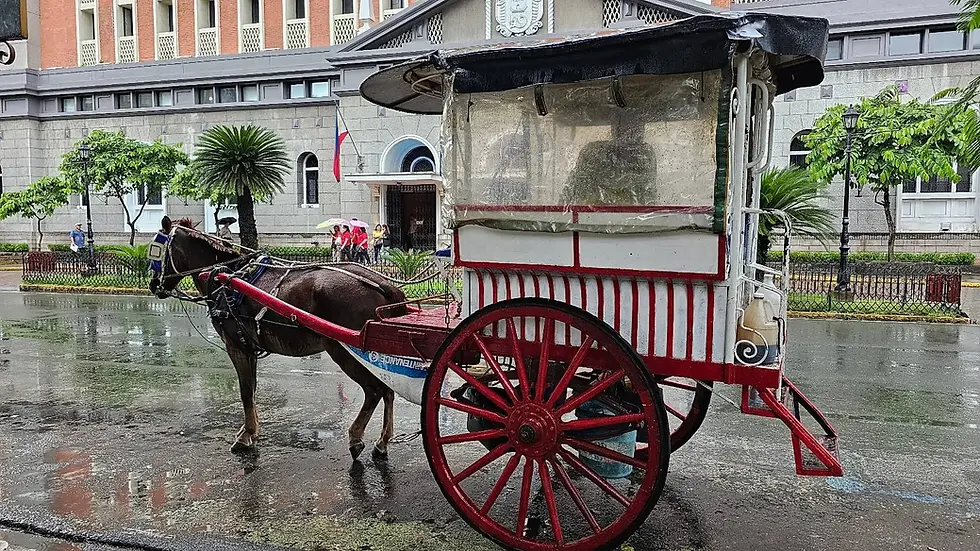
Horse-drawn carriages, known as kalesas, add a touch of nostalgia as you traverse the cobblestone streets.
The Rizal Shrine (in Fort Santiago), dedicated to Philippine national hero Jose Rizal, offers insights into the struggle for independence during the Spanish colonial period.
⪢ A City Forged Anew
Intramuros bears the marks of a tumultuous past, most notably the devastation of World War II. Yet, it's a city that persistently strives forward.
Today, ongoing restoration efforts meticulously preserve the historical character of the district.
Modern cafes and art galleries seamlessly blend with the historical landscape, creating a vibrant cultural hub.
⪢ A Destination Not to be Missed
Whether you're a history enthusiast or simply seeking a unique cultural experience, Intramuros is a must-visit destination in the Philippines.
Every corner whispers stories of a bygone era, waiting to be discovered. Intramuros offers a chance to step back in time and explore a captivating chapter in Philippine history.
Why Is It Called 'Dark Tourism'
Dark tourism, also sometimes referred to as thanatourism, black tourism, or grief tourism, is a travel trend that involves visiting places associated with death, tragedy, and suffering.
It's not about enjoying the macabre, but rather about understanding and learning from dark chapters in human history.
Dark tourism sites can be battlefields, concentration camps, genocide memorials, graveyards, prisons, or even sites of natural disasters.
People are drawn to dark tourism for various reasons. Some seek to learn about history firsthand, confront the darker aspects of humanity, or pay respects to those who have suffered.

While visiting places of death and disaster has been around for centuries (think of attending gladiator games in the Roman Colosseum), dark tourism as a defined concept is a relatively recent phenomenon, gaining traction in the late 20th century.
Places like Auschwitz in Poland, Chernobyl in Ukraine, Hiroshima in Japan, and the Catacombs of Paris (France) are all considered dark tourism sites. As is Intramuros, too.
Dark tourism can be a sensitive topic. Critics argue that it can be disrespectful to victims and insensitive to survivors.
It's important to be respectful when visiting such sites and to learn about the history involved.
We believe that these sites are an important way to educate our current generations about the mistakes of the past, but some may argue that they become more about social media sharing than about honoring the dead or education for the most part.
What do you think?
Is Dark Tourism Disrespectful / Insensitive?
0%Yes
0%No
ADVERTISEMENT
The History of Intramuros
Intramuros, translating to "within the walls" in Spanish, is a historic district located in the center of Manila, Philippines.
Established by the Spanish conquistador Miguel López de Legazpi in 1571,
Intramuros was constructed as a defensive fortress, encircled by massive stone walls and moats to safeguard the Spanish settlers from attacks by local indigenous groups and other foreign powers.
The walls of Intramuros served as a physical barrier separating the Spanish elite from the outside world.

Intramuros became the political, religious, and economic center of Manila during the Spanish colonial period.
The architecture in the district reflects a fusion of Spanish colonial and Asian styles, featuring elegant facades, intricate carvings, and cobblestone streets.
The district was designed in a grid pattern, typical of Spanish colonial urban planning, with the central plaza, Plaza Mayor (now called Plaza de Roma), as the main focal point.
Key structures like the Manila Cathedral and San Agustin Church underline its role as a religious and cultural hub.
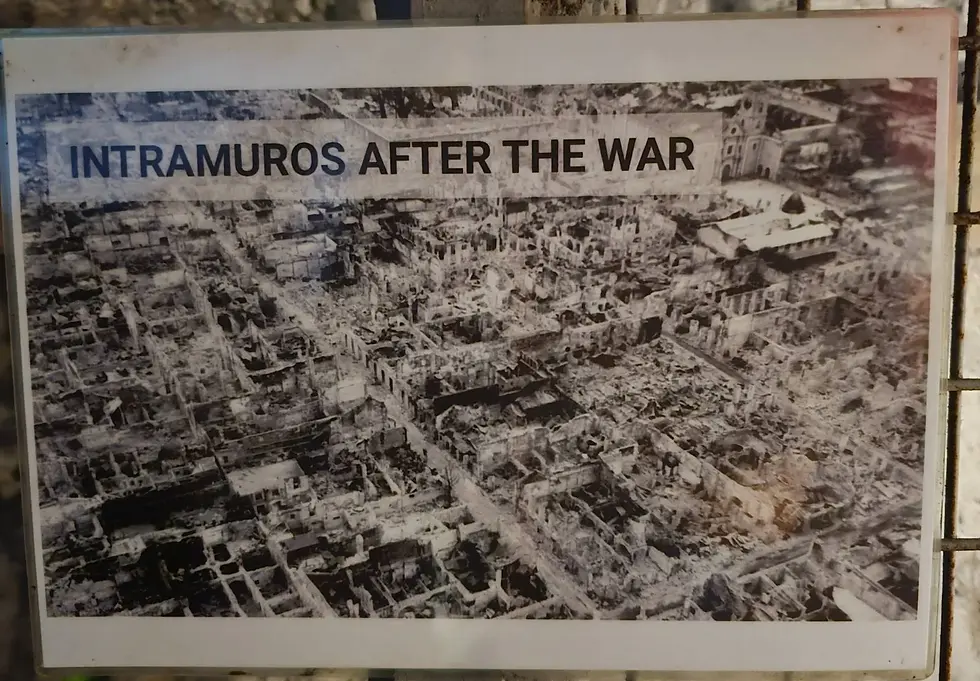
Intramuros survived the Seven Years' War between Spain and Britain in 1762 but faced severe destruction during World War II, enduring heavy bombing by American forces after Japan invaded and occupied the city.
During this time, much of the original architecture and structures were either destroyed or damaged, not only due to the bombing but also because of the 'scorched earth' tactics employed by the retreating Japanese army.
Intramuros was nearly obliterated, making Manila the second most devastated city of World War II, following Warsaw in Poland.
Since the war's end and the declaration of Philippine independence from the U.S. in 1946, efforts have been undertaken to preserve and restore the historical heritage that remains in Intramuros.
Despite the loss of much of the original city, Intramuros remains a treasured site, drawing tourists eager to explore the Philippines' colonial history.
It provides a unique window into the nation's past through its museums, cultural sites, and landmarks.
As a living testament to the Philippines' history, Intramuros symbolizes the country's resilience and offers a tangible link to its struggle for freedom from foreign dominion.

Must-See Places in Intramuros
There are many important places of interest in Intramuros, but here are a few that we highly recommend you check out:
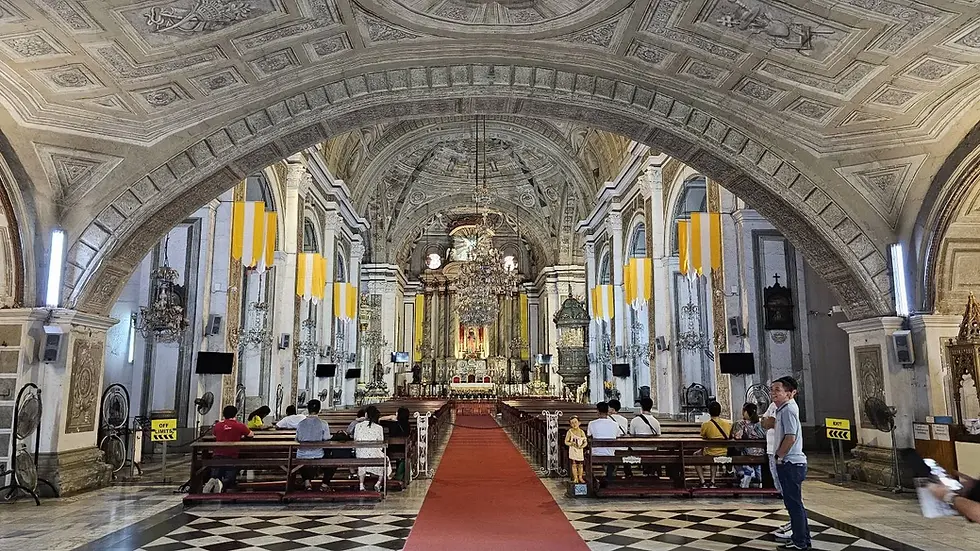
San Agustin Church
The San Agustin Church is the oldest of the four Baroque Churches of the Philippines, inscribed as a UNESCO World Heritage Site.
It is the only church that survived the near-complete destruction of Intramuros in WW2.
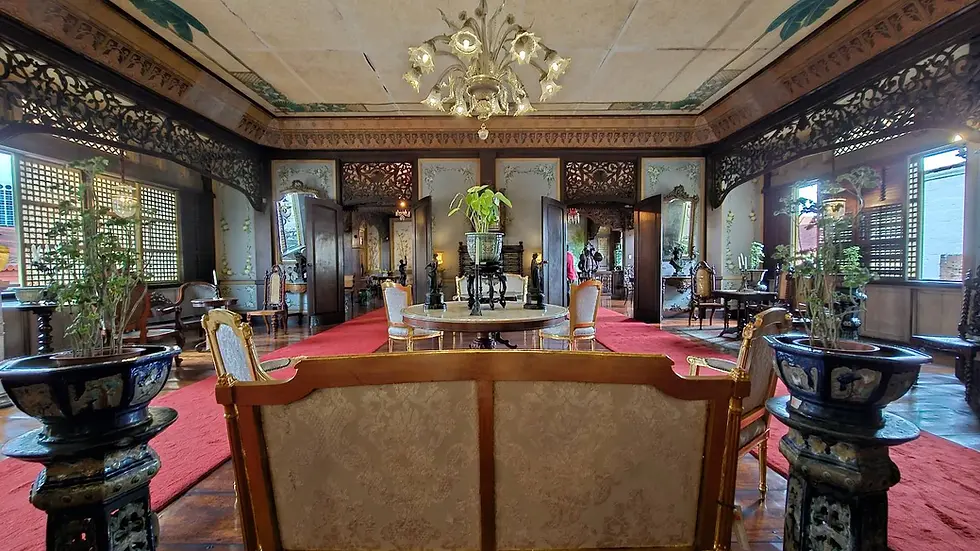
Casa Manila
Casa Manila is a museum that was built in 1980, showcasing the lifestyle of a wealthy Filipino family during the Spanish colonial period.
It is a fascinating tour back in time here, with original features and furnishings.

Manila Cathedral
Manila Cathedral, aka the Cathedral-Basilica of the Immaculate Conception, is a historic minor basilica and an important place of worship.
It has been rebuilt seven times, overcoming several wars and earthquakes.

Barbara’s Restaurant
Step back in time at Barbara’s Heritage Restaurant in Manila’s famous walled city of Intramuros.
A must-visit for great food, music, and culture. A wonderful way to immerse yourself in the incredible history and tradition of the Philippines.
Watch Us Explore Intramuros on YouTube
This video guides you through both luxurious and local attractions as we explore the city of Intramuros.
No matter the weather, we made the most of our day!
We visit popular tourist spots like the Plaza San Luis Complex, featuring Barbara's Heritage Restaurant, The Royal Cafe, and the Casa Manila Living Museum.
Then, we explore San Agustin Church, Manila Cathedral, and Fort Santiago, all while enjoying the vibrant and welcoming atmosphere of Manila that we've come to love.

If you enjoy our video and want to follow more of our adventures, please like and subscribe!
Your support truly is invaluable to us, and we will always strive to produce the best content we can from around the world!

Intramuros Opening Hours & Entrance Fee
Intramuros itself, as the walled city of Manila, doesn't have specific opening hours per se, although you will find that the pedestrian and vehicular gates are advertised to open at 5 am and close at 10:30 pm.
The gate we entered through seemed heavily guarded, so we would assume this to be enforced, although details online are sketchy at best.
Most attractions are open from Tuesday to Sunday, from 9 am to 6 pm.
It's important to note that some museums and churches may have different schedules, and some are closed on Mondays.
To be on the safe side, it's always a good idea to check the specific opening hours of the places you want to visit before you go.

⪢ Intramuros Entrance Fee
There is no entrance fee to access Intramuros itself.
However, some of the attractions within Intramuros do charge entrance fees.
For example, Casa Manila and Museo de Intramuros both have entrance fees.
You can find a list of the entrance fees for all of the attractions in Intramuros on the official website.
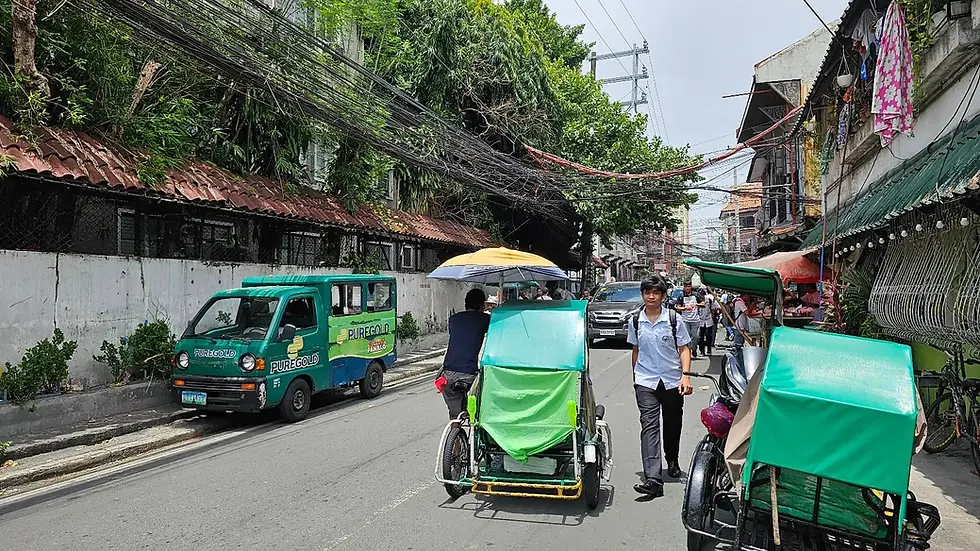
How to Get to Intramuros in Manila
Intramuros is located in the heart of Manila and is a central and accessible location for both locals and tourists.
There are a number of different transport options you can choose from when planning your trip.
By LRT (Light Rail Transit)
This is the most budget-friendly option. Take the LRT Line 1 (Green Line) and alight at Central Terminal Station.
From there, it's a short walk or tricycle ride to Intramuros.
● Fare: Approximately PHP 15-30 (subject to change).
● Travel Time: Around 30 minutes depending on your starting point.
By Jeepney
Jeepneys are a colorful and iconic mode of transportation in Manila. Several jeepney routes pass by Intramuros.
Look for jeepneys with signs indicating "Intramuros," "Roxas Blvd (Ermita)," or "Central Terminal."
● Fare: Minimum fare of PHP 9 (subject to change) depending on the distance travelled.
● Travel Time: Varies depending on traffic conditions.

By Taxi
Taxis offer a convenient and comfortable option, especially with luggage.
Metered taxis are recommended. Ensure the meter is running before your trip begins.
● Fare: Varies depending on the distance and traffic conditions. Expect the base fare to be around PHP 40 and an additional charge per kilometer.
● Travel Time: The fastest option, particularly if you're coming from a far distance.
Traffic congestion can significantly impact travel time, though (and it can be very bad, especially in the evening).
By Kalesa (Horse-Drawn Carriage)
Experience a touch of nostalgia with a kalesa ride.
These horse-drawn carriages are readily available around Intramuros and offer a unique way to explore the historic district.
● Fare: Negotiate the fare beforehand. Expect it to be higher than other transportation options.
Car Rental
Whether you're planning scenic road trips or quick rides around town, renting a car or scooter can save time. Rentalcars.com helps you find the best deals from reputable providers.
⪢ Consider Taking a Tour
One of the most popular ways to explore Intramuros is by tour. We recommend checking out the vast number of different options with GetYourGuide.
⪢ Contact Information for Intramuros
● Address: Manila, 1002 Metro Manila, Philippines
● Website:
● Instagram:
● Facebook:

ADVERTISEMENT
Where to Stay in Manila
Looking for a place to stay nearby? Browse Manila hotel deals below to find great rates from top providers in the city.
Our map offers a user-friendly interface that allows you to zoom in and out, providing a comprehensive view of the area and enabling you to identify the most convenient hotel options based on your current location or desired destination.
Our Experience Rating:
Intramuros

The Intramuros of today is a far cry from where it was a decade ago, let alone after the war.
Today, it is a bustling hub of tourists, traders, and tour guides.
It is a little overwhelming as you first enter, as you will be bombarded by a plethora of people offering you transport around the place.
Should you want to go your way, you will find sidewalks hard to come by, and a lot of traffic on the roads.
That being said, it is nice to go at your own pace, and the main points of interest in the city are perfectly walkable.
We thoroughly enjoyed checking out the San Agustin Church, Manila Cathedral, and, in particular, Casa Manila.
At that point, we were enjoying the old buildings and the general vibe!
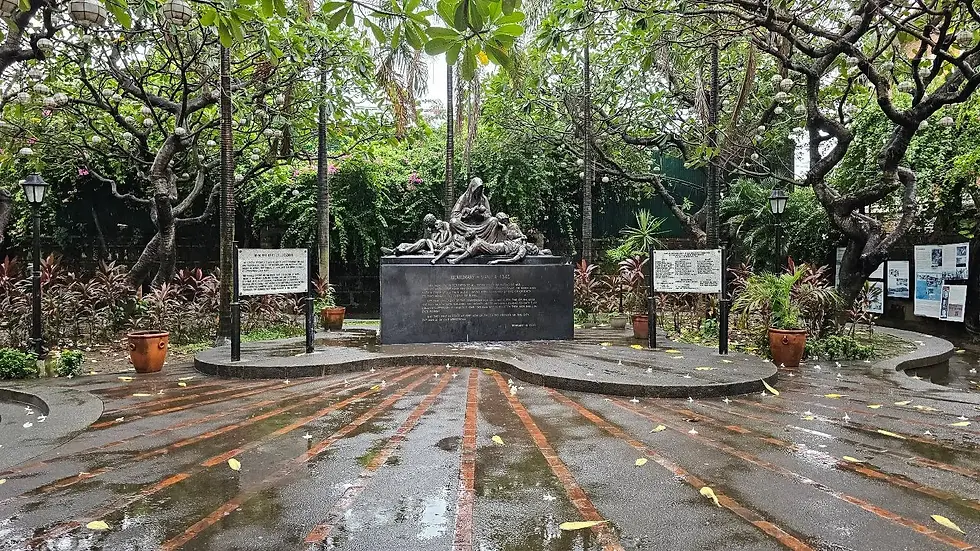
The tough part was heading to Fort Santiago last, in particular heading down into the prison bunker, which told the story of Intramuros' dark past that broke us inside.
It was a sobering end to the visit and one which gave our hearts to the lives lost, and the Philippine people who have endured so much terror and subjugation over the years.
This is a proud nation, and its fight for independence never ceased and was eventually successful, and it endeared us even more to this incredible country.
We have no doubt a visit to Intramuros will do the same for you, too.
FAQ: Intramuros – Manila’s Historic Walled City
What is Intramuros?
Intramuros, meaning “within the walls,” is the oldest district of Manila, built by the Spanish in the 16th century.
Once the seat of colonial power, it’s now a living museum filled with churches, forts, museums, cobbled streets, and colonial architecture.
Why is it associated with dark tourism?
Intramuros witnessed centuries of conflict, colonization, and bloodshed.
From Spanish rule and WWII atrocities to the execution of national hero José Rizal, many sites hold haunting histories, making it a destination for those drawn to somber or reflective travel.
💡 Visitors often feel a mix of reverence and curiosity as they explore the past etched into its walls.
What are the must-see places in Intramuros?
● Fort Santiago (Rizal’s prison and execution site)
● San Agustin Church & Museum (a UNESCO site)
● Baluarte de San Diego (bastion ruins)
● Intramuros Wall Walks and old gates like Postigo and Victoria
Can I walk on the walls of Intramuros?
Yes. You can walk parts of the fortified walls, especially from Baluarte de San Diego to the riverside near Fort Santiago.
Some sections are restored and offer elevated views over the city.
Is it better to visit Intramuros by day or night?
Daytime offers clear historical exploration, but evening visits can be atmospheric and eerie, especially for those intrigued by its ghost stories and dark past.
Some night tours and ghost walks are also available.
Are there guided tours available?
Yes. You can join:
● Bamboo bike tours
● Evening ghost tours
● DIY explorations with posted signs and QR codes
How long should I spend in Intramuros?
At least 3–4 hours to fully enjoy the museums, churches, and walls. A full day allows for meals, guided tours, and extra photo stops.
Is Intramuros suitable for children or families?
Yes. Despite its serious history, it’s also interactive and scenic, with open plazas and carriage rides.
However, certain exhibits and stories might not be suitable for very young children.
Is it safe to walk around?
Yes. Intramuros is generally safe for tourists, especially during the day.
Sidewalks can be narrow though, and not always in the best condition in places, so it is important to watch out for traffic (it is not pedestrianized)
What else is nearby?
● Rizal Park & National Museum Complex
● Binondo (Chinatown)
● Ocean Park and Manila Baywalk
● Escolta Street for colonial-era architecture


Comments